Case study · 2026
Le poids des choses
An illustrated carbon comparison tool that encourages rather than guilt-trips: every lighter choice grows a garden that animals come to live in. ADEME data, AI with guard rails.
- Role
- Concept, UX/UI, identity and art direction. Illustrations made with the help of AI, then retouched by hand. Development led with Claude Code, which wrote most of the code.
- Stack
- Next.js · React · TypeScript · Tailwind CSS · GSAP · Cloudflare · API Claude · API Impact CO2 · Vitest · Playwright · Figma
- Status
- Live, beta version
01Context
Compare two choices, rather than tally a total.
I wanted a project that brought together what I enjoy most: animated web, illustration and a genuinely useful product, built on public data rather than a made-up client.
Carbon calculators already exist, but most give you a scary total and then nothing. I wanted the opposite: put two everyday choices side by side, see the gap, and be rewarded for picking the lighter one. Every lighter choice grows a garden.
The need
Make ADEME's figures readable, without jargon or guilt, and give people a reason to come back with no leaderboard and no streak to lose.
My role
Concept, UX/UI, identity, art direction and decisions. The illustrations were made with the help of AI, then retouched by hand. Claude Code wrote most of the code; I led, reviewed and tested every batch.
The constraints
No invented figures: values come from ADEME, apart from two stated assumptions (second-hand, keeping your own). Mobile first, accessible, no account required, in French and English.
02Intentions
Encourage, don't guilt-trip.
- Nothing is taken away: a heavier choice is simply noted. The garden never dies: after three weeks without a new choice, it falls asleep under the mist, and in winter its trees sleep rather than wither.
- Say "gap", not "saved": the site can't know what someone would have done without it. So everywhere it talks about the gap in kilos between two options, never kilos saved.
- Gentle rewards: animals arrive, new species unlock. No leaderboard, no streak to protect.
- Checkable facts: every species fact and every animal line that states a fact has its source written down in the repository.
03Art direction
Cut paper, so the data feels like a picture book.
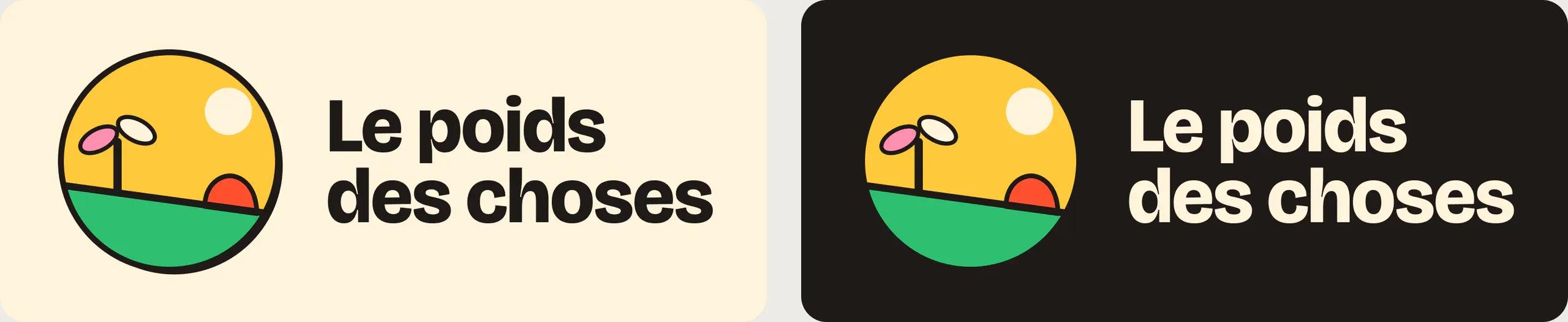
Flat shapes, a near-black ink, market-stall colours and generous type. The logo tells the story: the horizon tilts like the beam of a balance, the light sprout rises and the heavy pebble sinks.
Colours
- Tomato#FF4F2E
Garden sun, accents
Black text 6.40:1
- Apple#2FBF71
Garden, lighter choices
Black text 8.81:1
- Ultramarine#2D4BFF
Hills, getting around
White text 5.89:1
- Sun#FFC93C
Buttons, digital
Black text 13.67:1
- Pink#FF8FB1
Flowers, clothing
Black text 9.81:1
- Fir green#1B6B45
"Did you know?"
White text 6.49:1
- Cream#FFF3DC — Background
- Ink#1F1A17 — Text and outlines
Typefaces
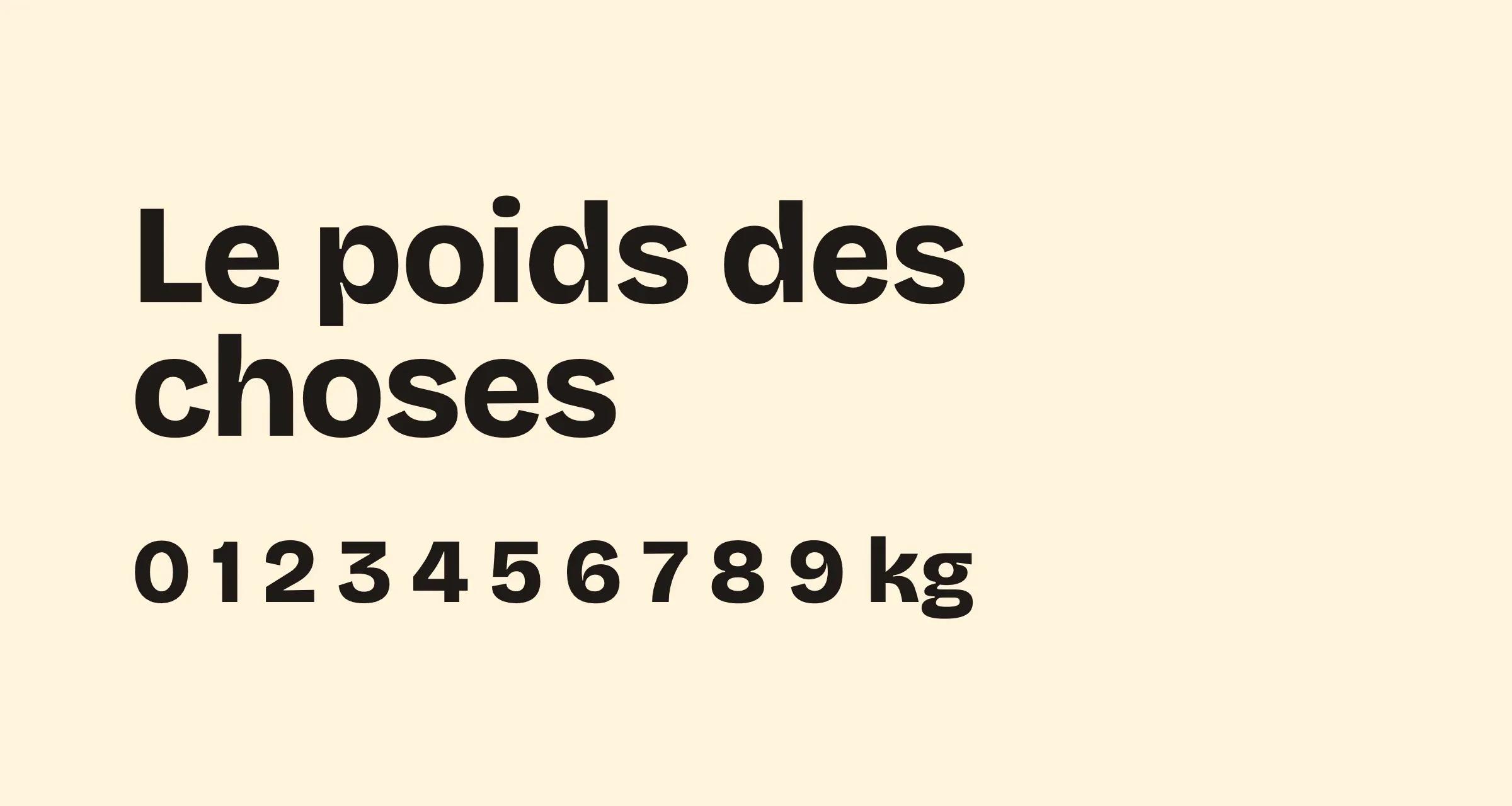
Bricolage Grotesque
Headings and figures, in ExtraBold
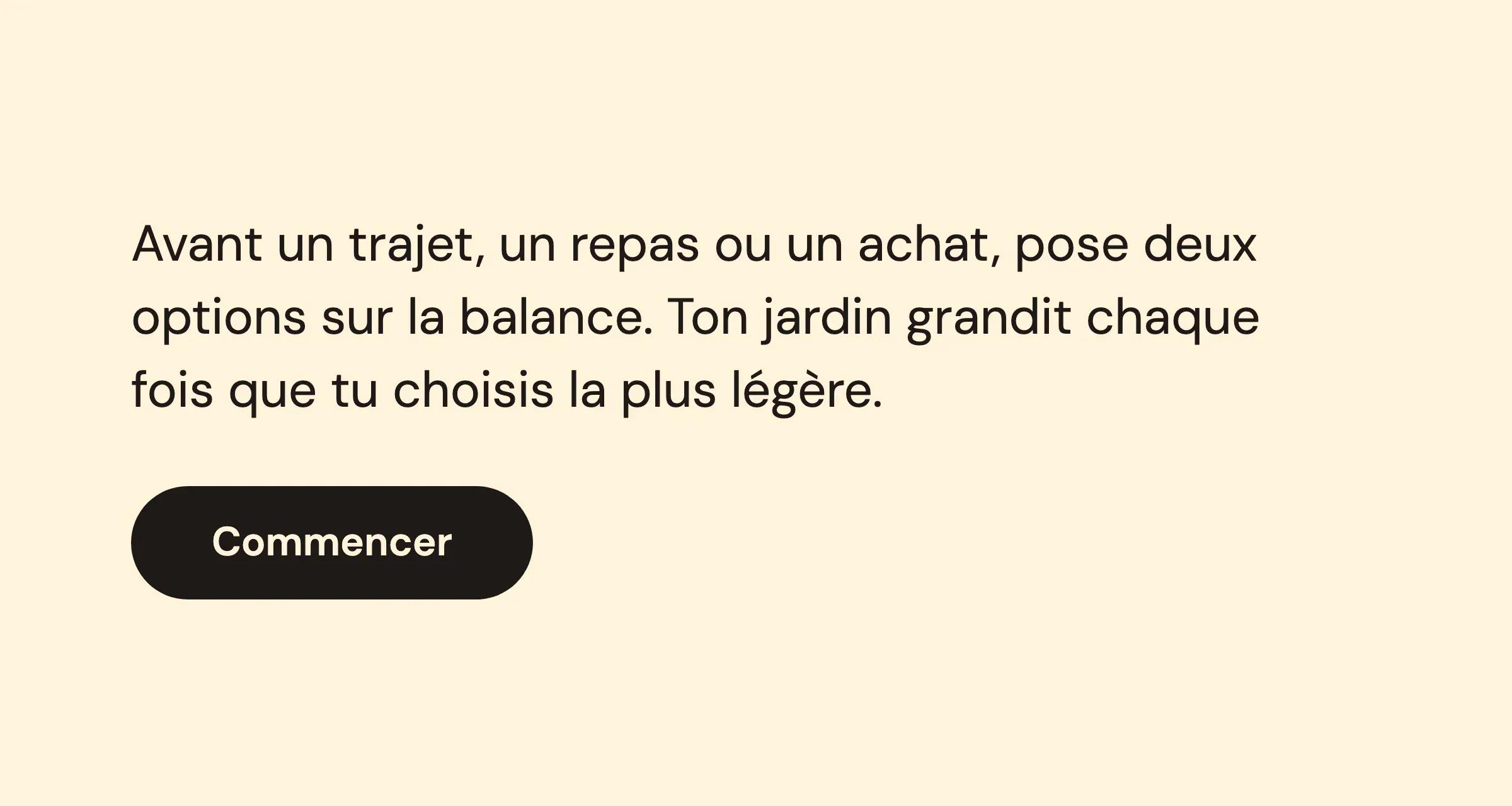
DM Sans
Body text and interface
04The garden and its residents
Every lighter choice plants something.
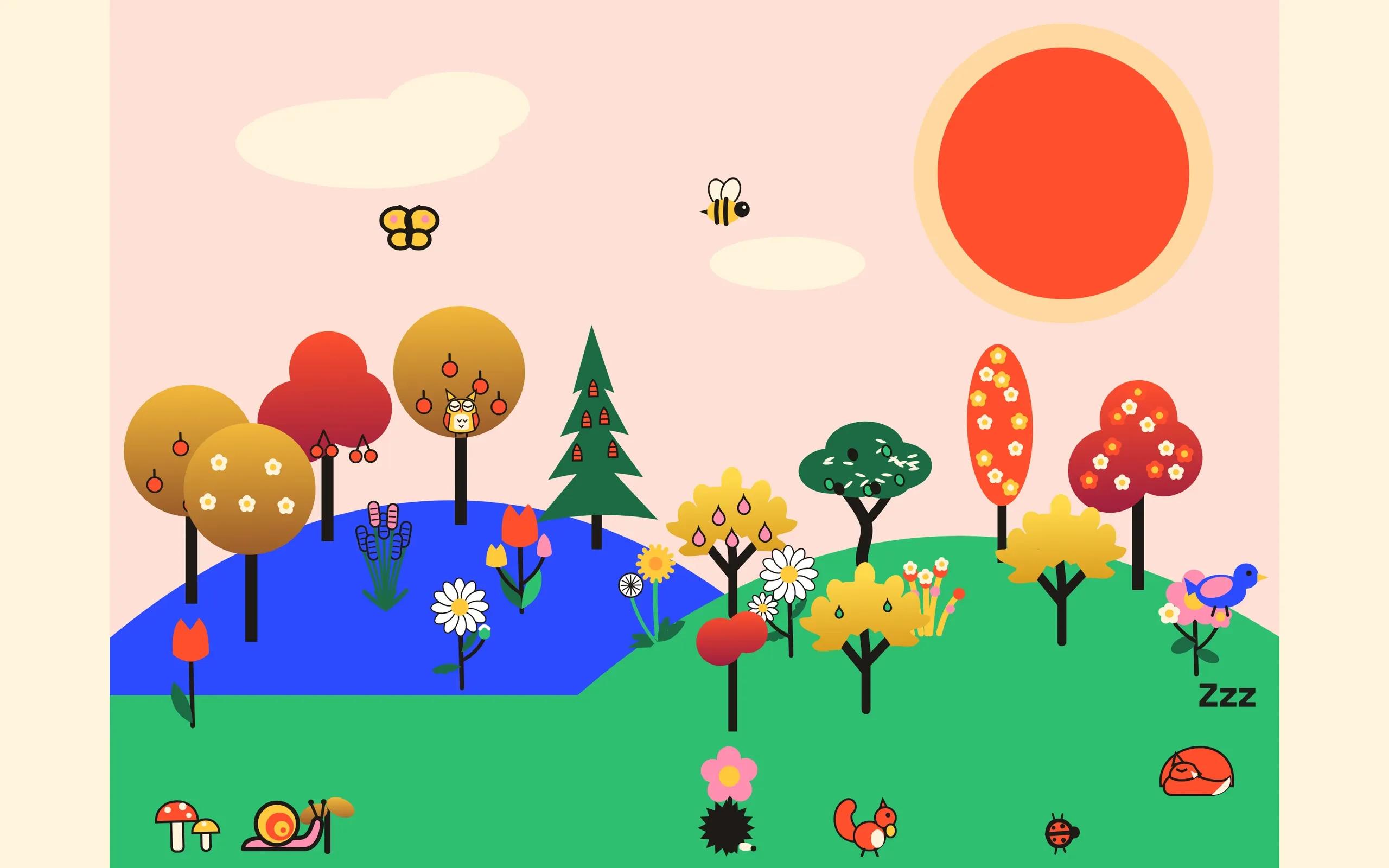
The heart of the site is a single gesture: comparing. Around it, the garden grows, changes with the seasons, gets watered by habits and fills up with animals who have things to tell you.
Comparing two choices
You put two choices on the scales: a car or bike journey, a meal, a pair of jeans bought new, second-hand or kept. The scales tip, the gap appears in kilos of CO2 equivalent, and a "Did you know?" calculated from the data gives a concrete reference point.
A garden that follows the real seasons
The garden lives by the calendar. In autumn each deciduous tree takes on its own gradient; in winter it sleeps, with buds at the tips of its branches to show it isn't dead. Evergreens stay the same. Each tree's card shows what lies ahead, season by season, and the garden turns to night from 9 pm to 6 am.
Watering a habit
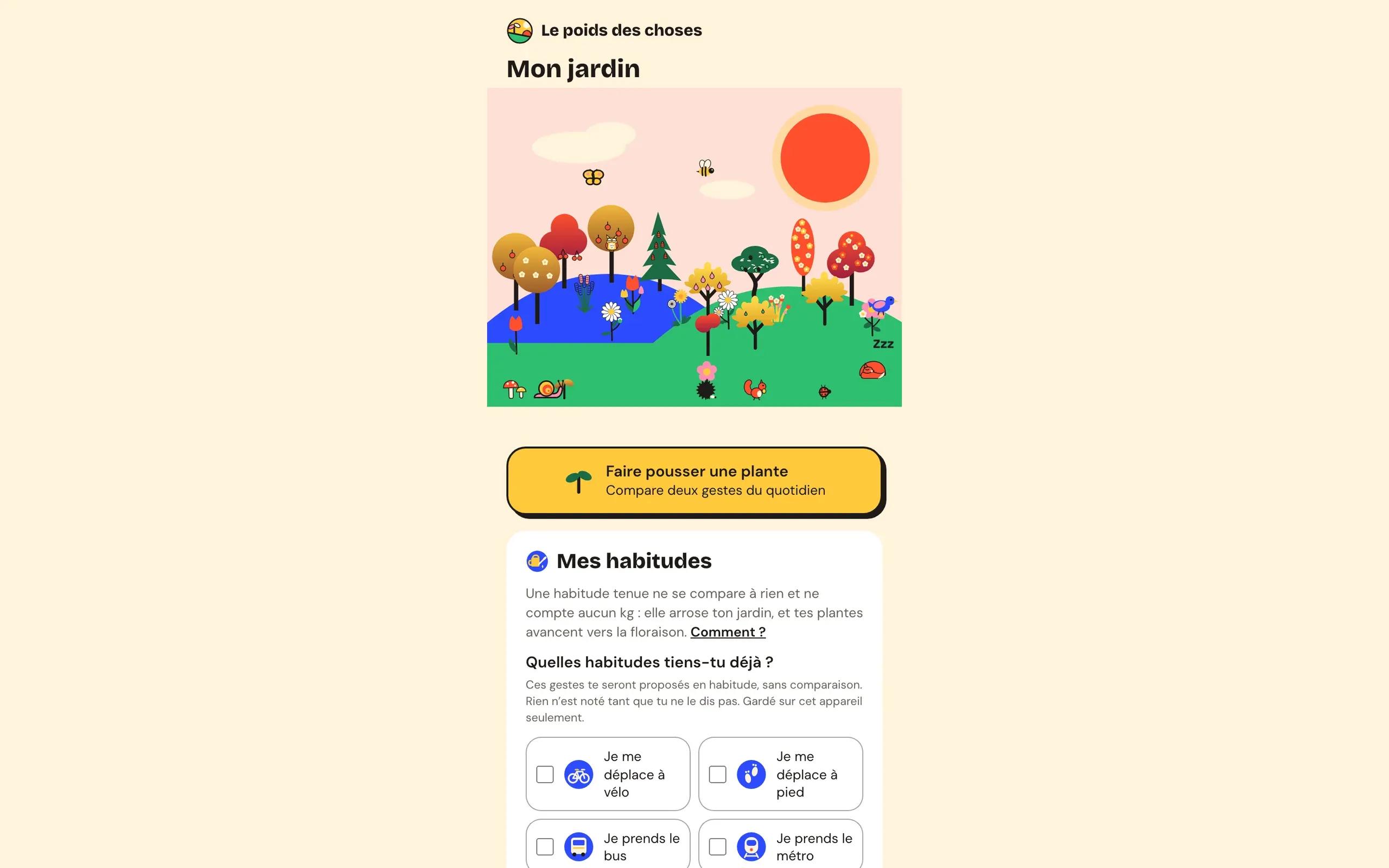
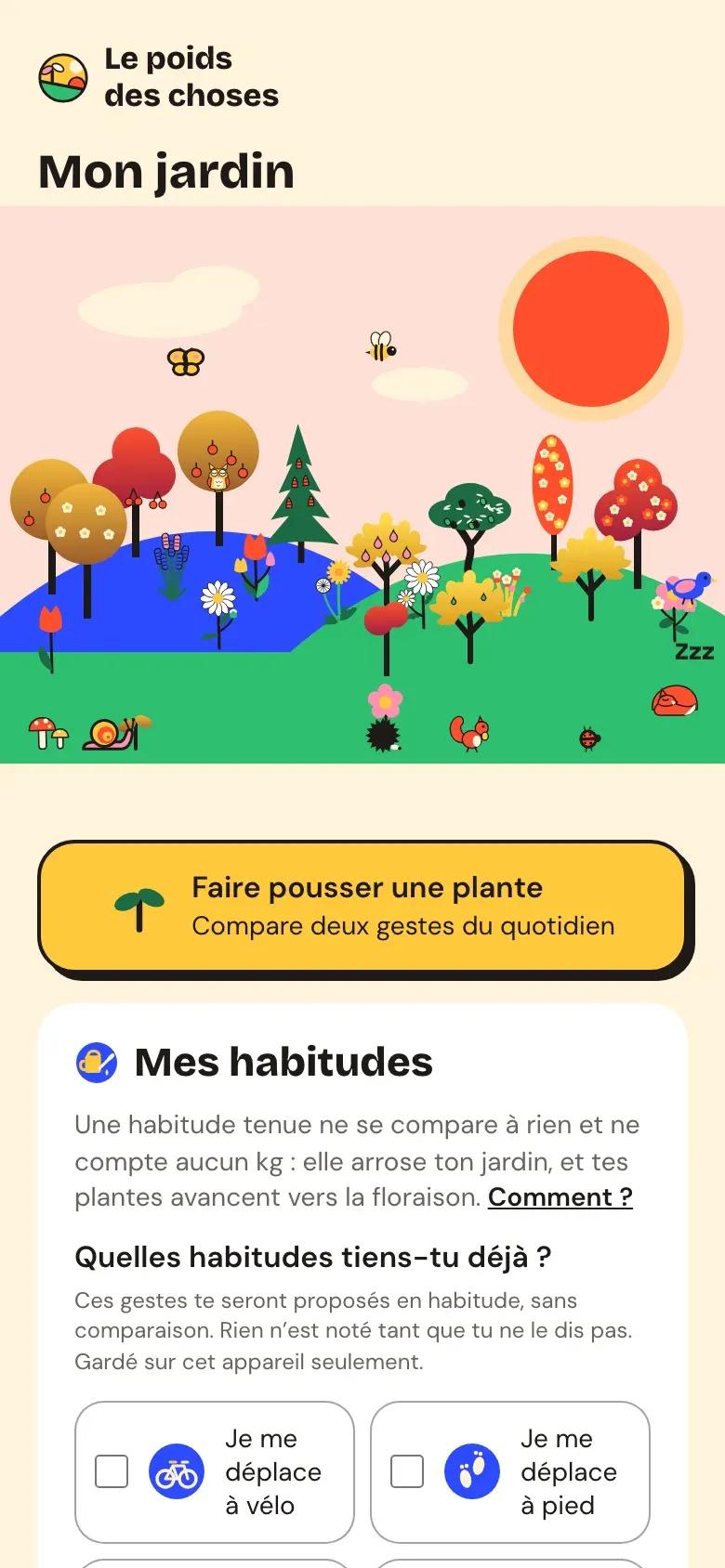
A vegetarian shouldn't have to compare every meal with a meat dish they would never eat. So there are two ways to feed the garden: comparing grows a plant and counts the gap in kilos; each habit you keep waters it, once a day, without counting a single kilo. The code prevents a figure from ever being attached to a habit.
Seven animals live in the garden: some arrive as you make choices, others drop by on their own depending on the season or the time of day, each with its own personality: a philosophical snail, a smooth-talking fox who sleeps by day, a bee always in a hurry… You tap them to talk. One line a day, sourced facts, and a friendship that builds over time. No AI improvises: everything is written in advance and reviewed.
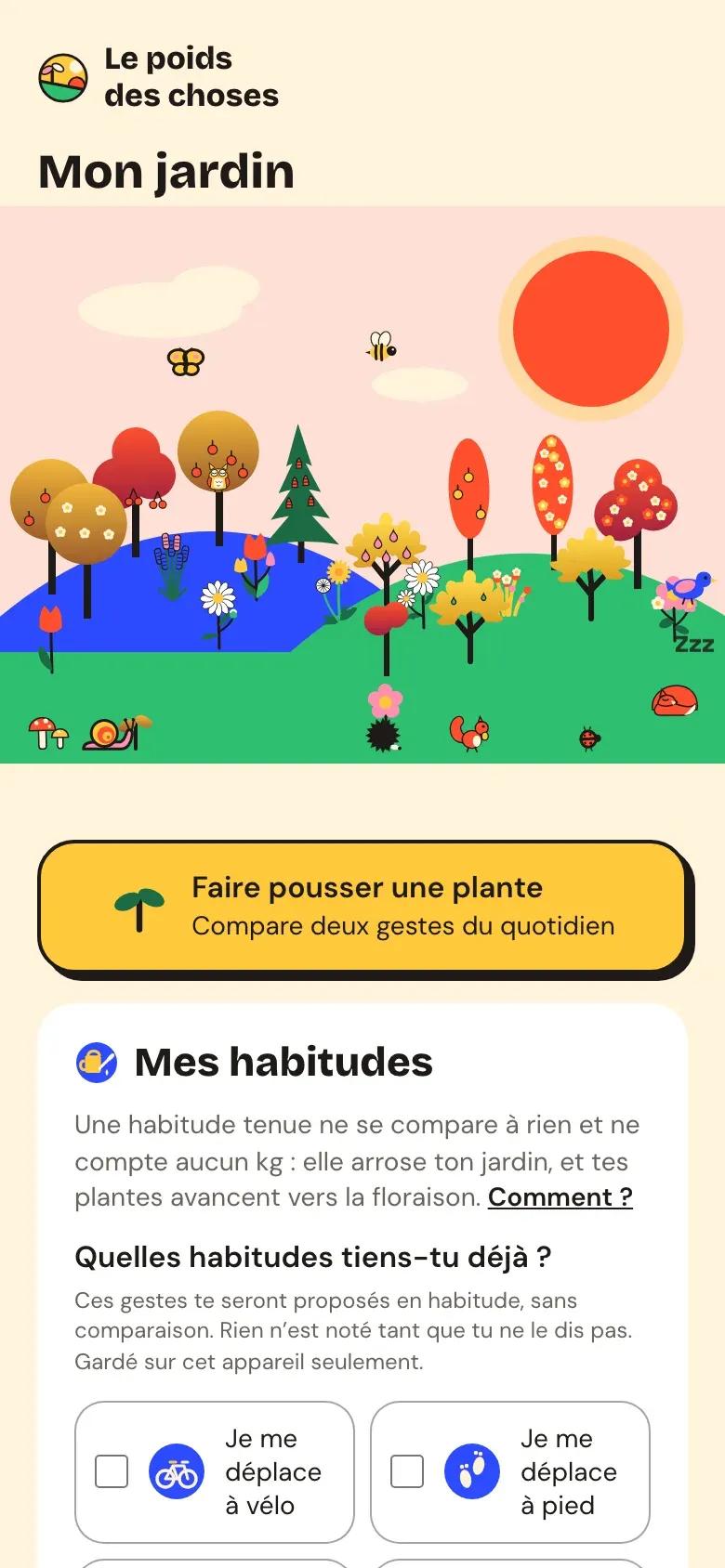
Tap
You tap an animal right in the garden.
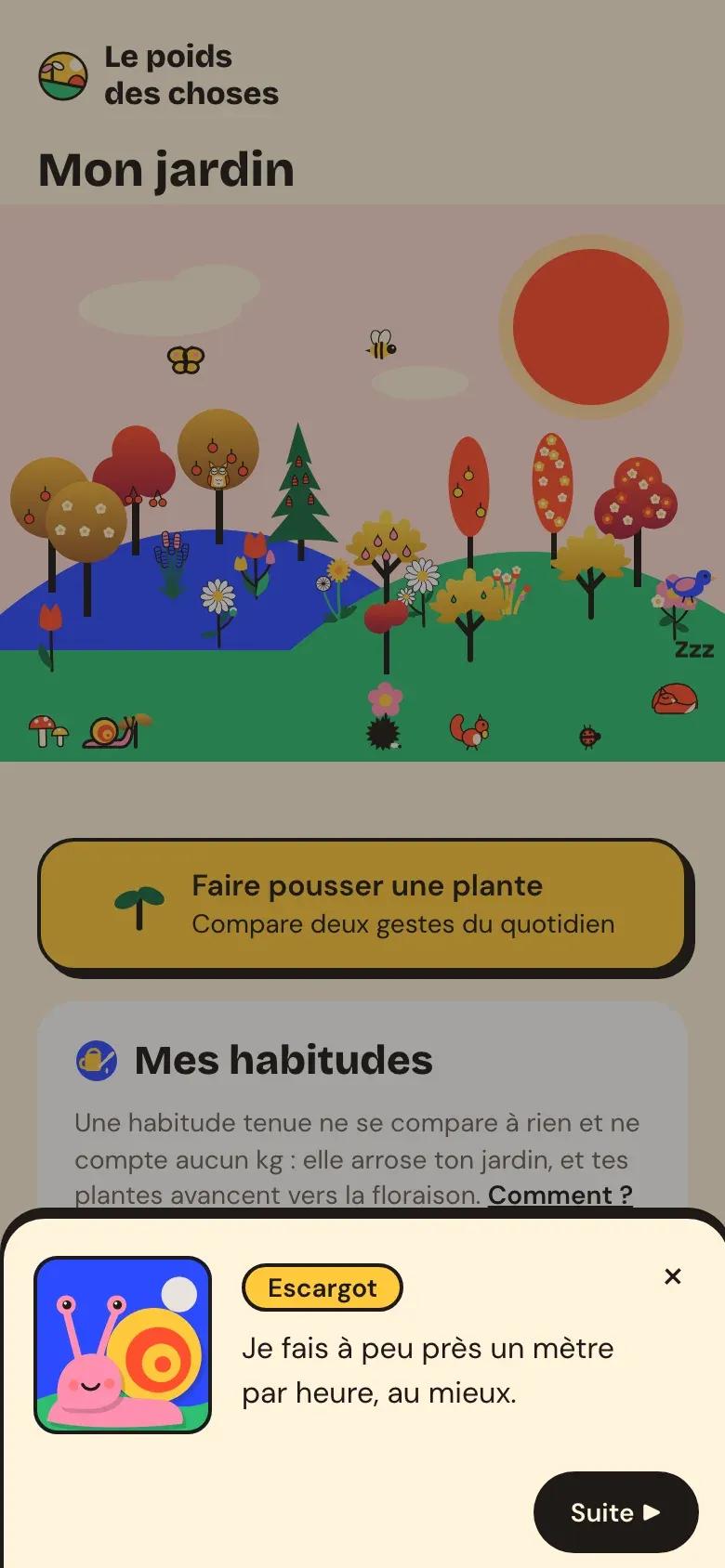
Talk
The dialogue box opens, video-game style, with the portrait on the left.
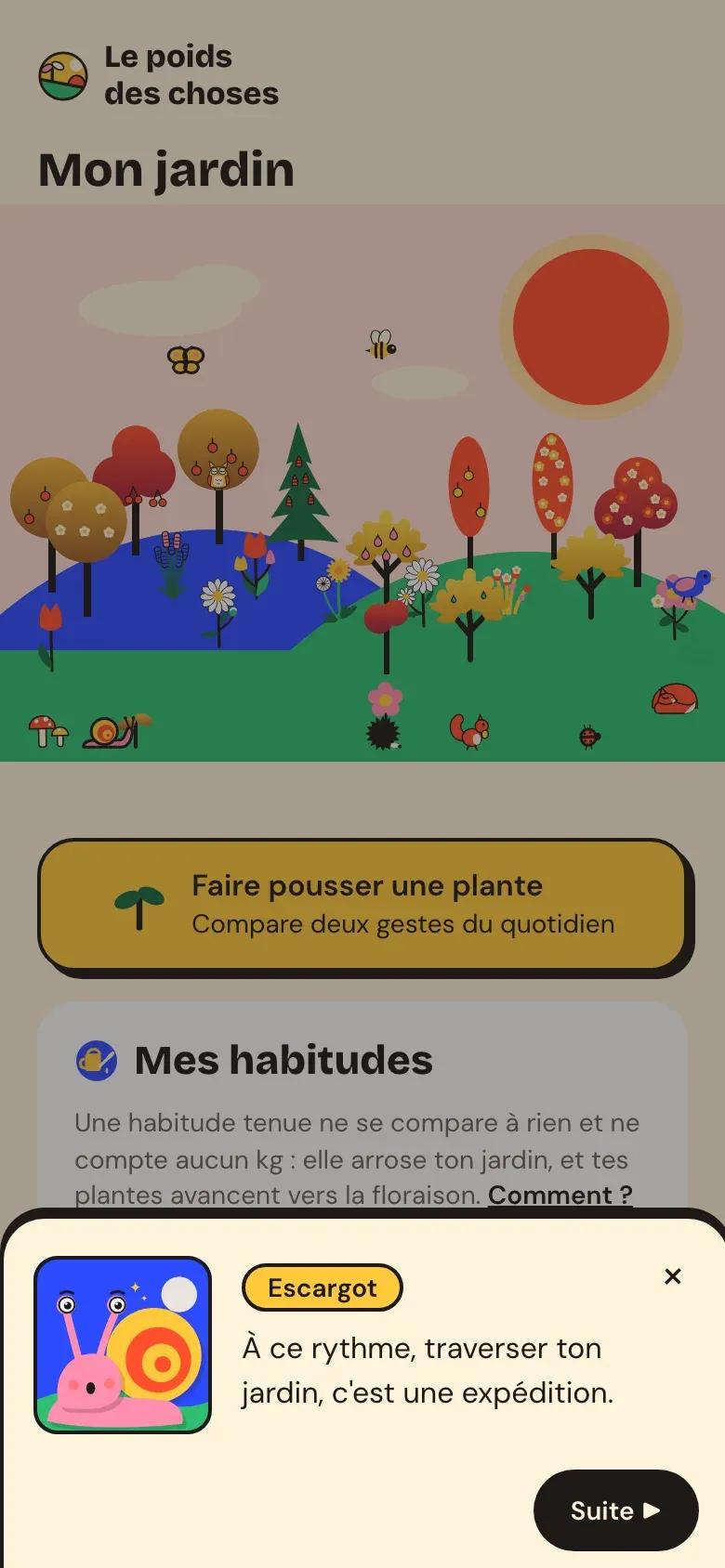
Next
The portrait changes expression from one step to the next.
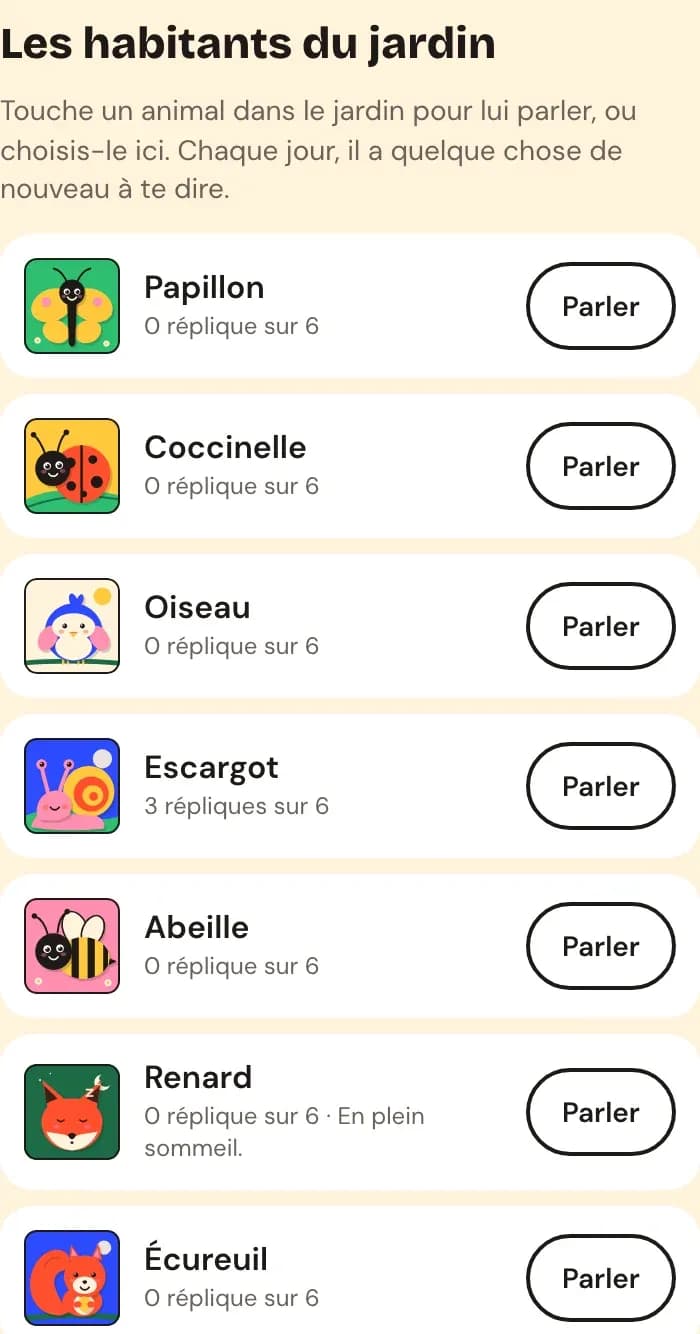
Come back
The garden residents: you follow your friendship with each one.
Sharing without kilos
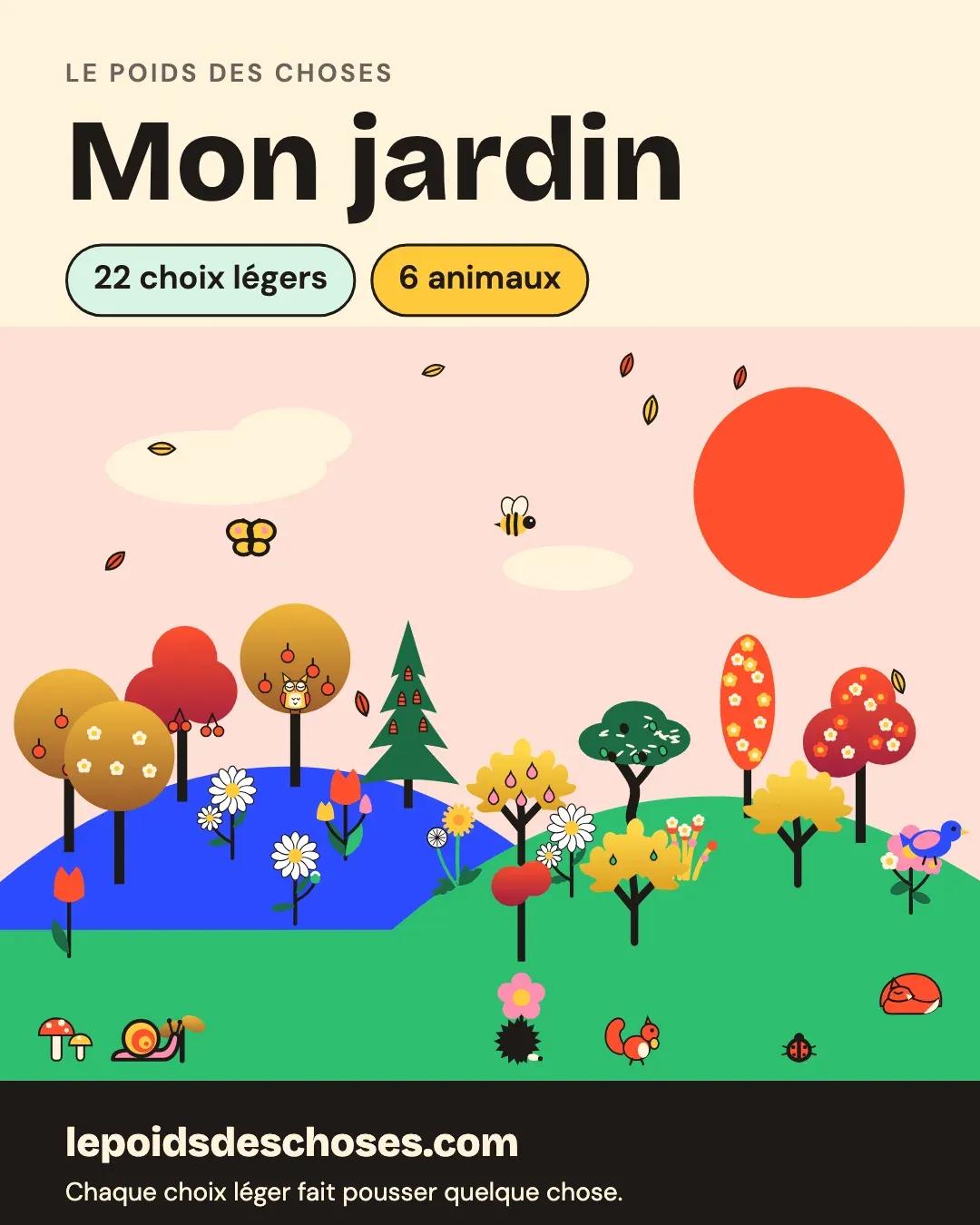
On mobile you can share your garden as an image. It's generated in the browser, follows the season, and deliberately shows no kilos: out of context, a total in kilos would read as a real saving and invite competition.
05Responsive
Built for phones first.
The site installs like an app on phones. On desktop, it keeps its mobile layout, centred on the page.
06Under the hood
Building with Claude Code, with nothing hidden.
AI wrote most of the code. I led the concept, the identity, the decisions, the reviews and testing on real phones. That split is what I want to show, without hiding or overstating it.
- In batches: each batch has its own branch, pull request, passing tests and live preview. Nothing reaches production without my review.
- Checkpoints: before anything sensitive, the agent stops and proposes; I decide.
- Written rules: no invented figures, no secrets, the "gap" wording, accessibility.
- Testing on phones: that's where the real bugs show up, like a share image that never got ready on Android even though every test passed.
The code is public: https://github.com/Guiguizaure/le-poids-des-choses.
"Tell us about your day": AI with guard rails
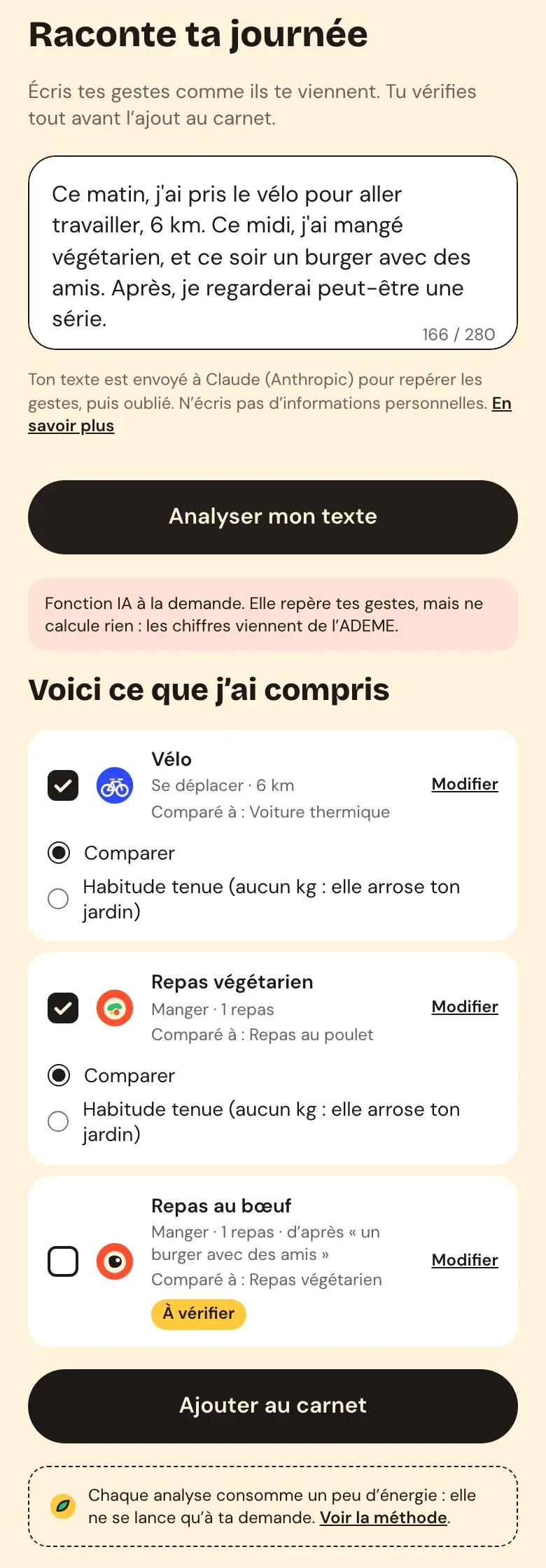
You describe your day in a few sentences, Claude Haiku spots the choices from the catalogue, and nothing goes into the log without your say-so. The AI never produces a figure: the values come from ADEME data. It can only answer with an item from the list, must quote word for word the excerpt that justifies it, and choices it merely infers arrive unticked and marked "To check". The site doesn't keep the text. On 27 trick sentences (negatives, plans, other people's actions, an injection attempt, English), it scores 27 out of 27. An honest limit: those sentences were written by the author of the prompt.
Under the hood
Honest data
ADEME authorised the reuse of its data, and the live build refuses to run if it finds placeholder data. The Method page explains where each value comes from.
Sourced facts
Species facts and animal lines each have their source and quote in the repository. A test blocks any "fact" line without a source.
A page that stays put
Self-hosted fonts, a fixed-height header, a home button chosen before first paint: a test measures layout shift on every build.
Accessible
Keyboard navigation, screen readers announced at every dialogue step, touch targets of at least 44 px, reduced motion respected and automated axe checks.
In figures
1,218
unit tests
Vitest, measured on main on 9 October 2026
419
end-to-end tests
Playwright, Chromium and WebKit
0
layout shift (CLS) on the garden page
Measured by the layout-shift test
100
Lighthouse accessibility
Mobile, live site, on 9 October 2026
Components and illustrations
Everything was drawn and assembled in Figma before it reached the code.
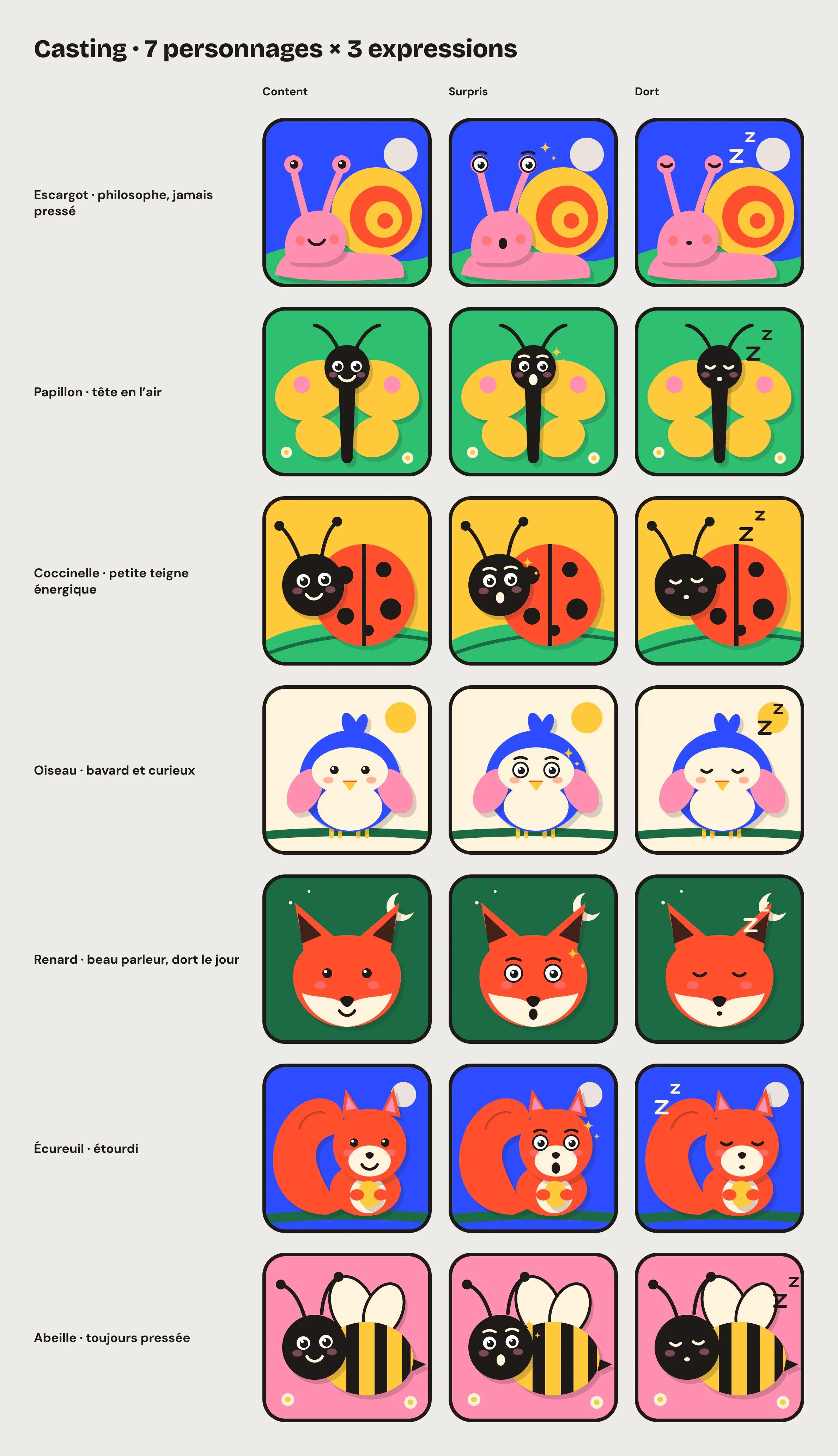
The cast: seven characters, three expressions each 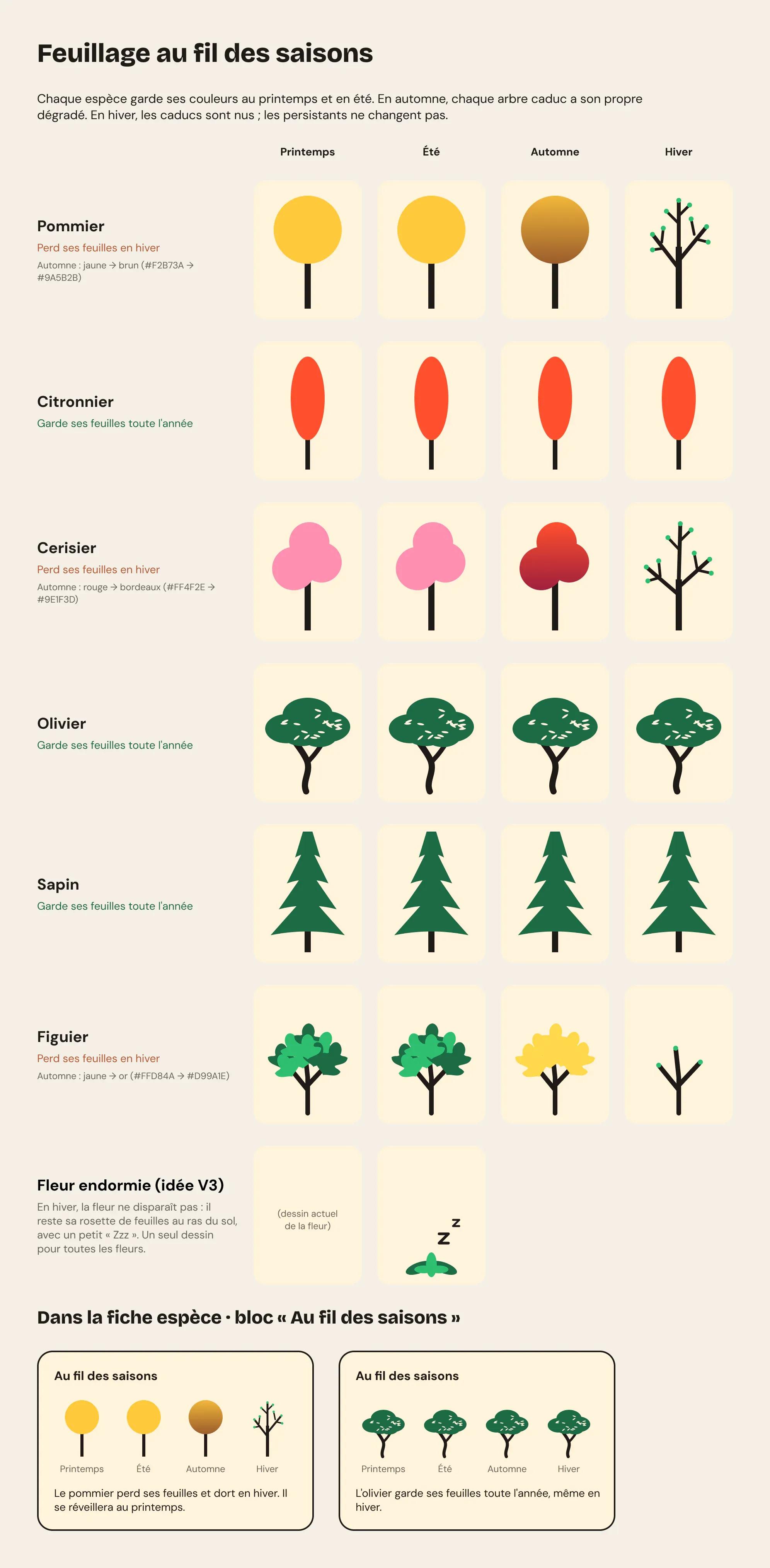
Foliage through the seasons 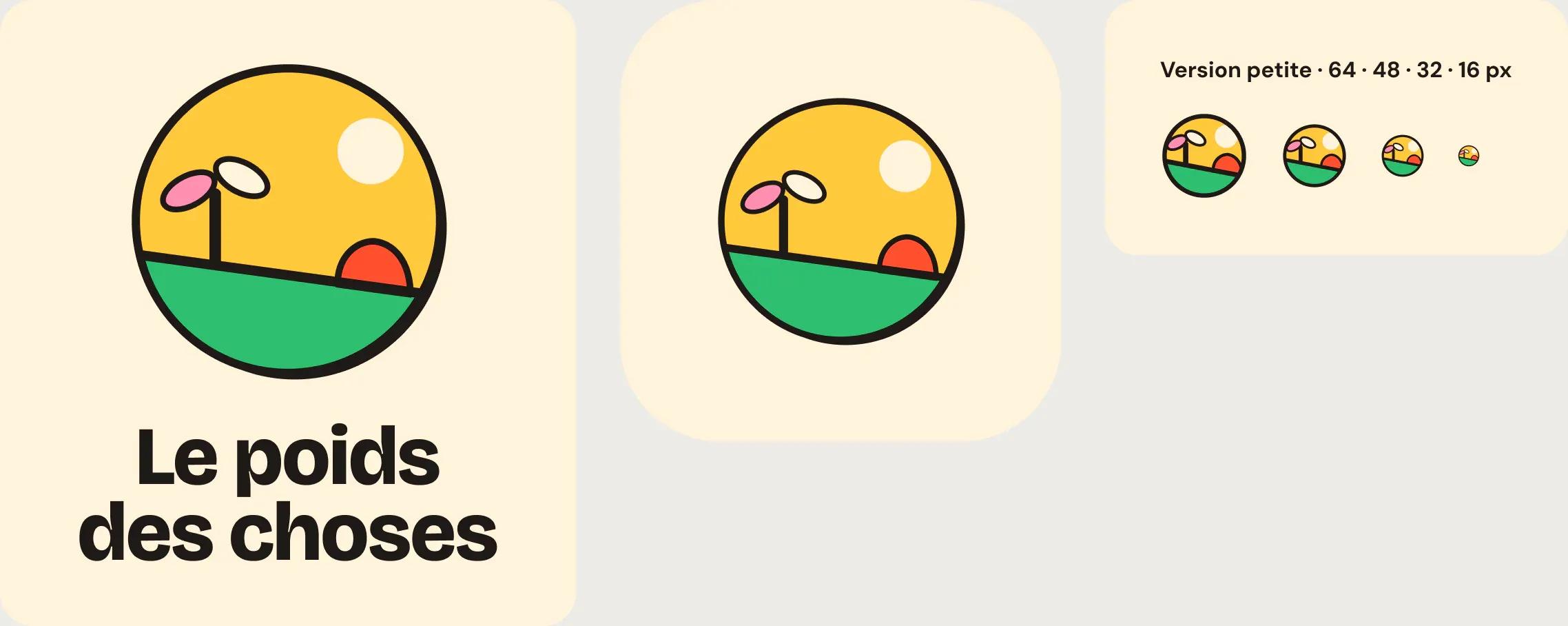
Logo variations 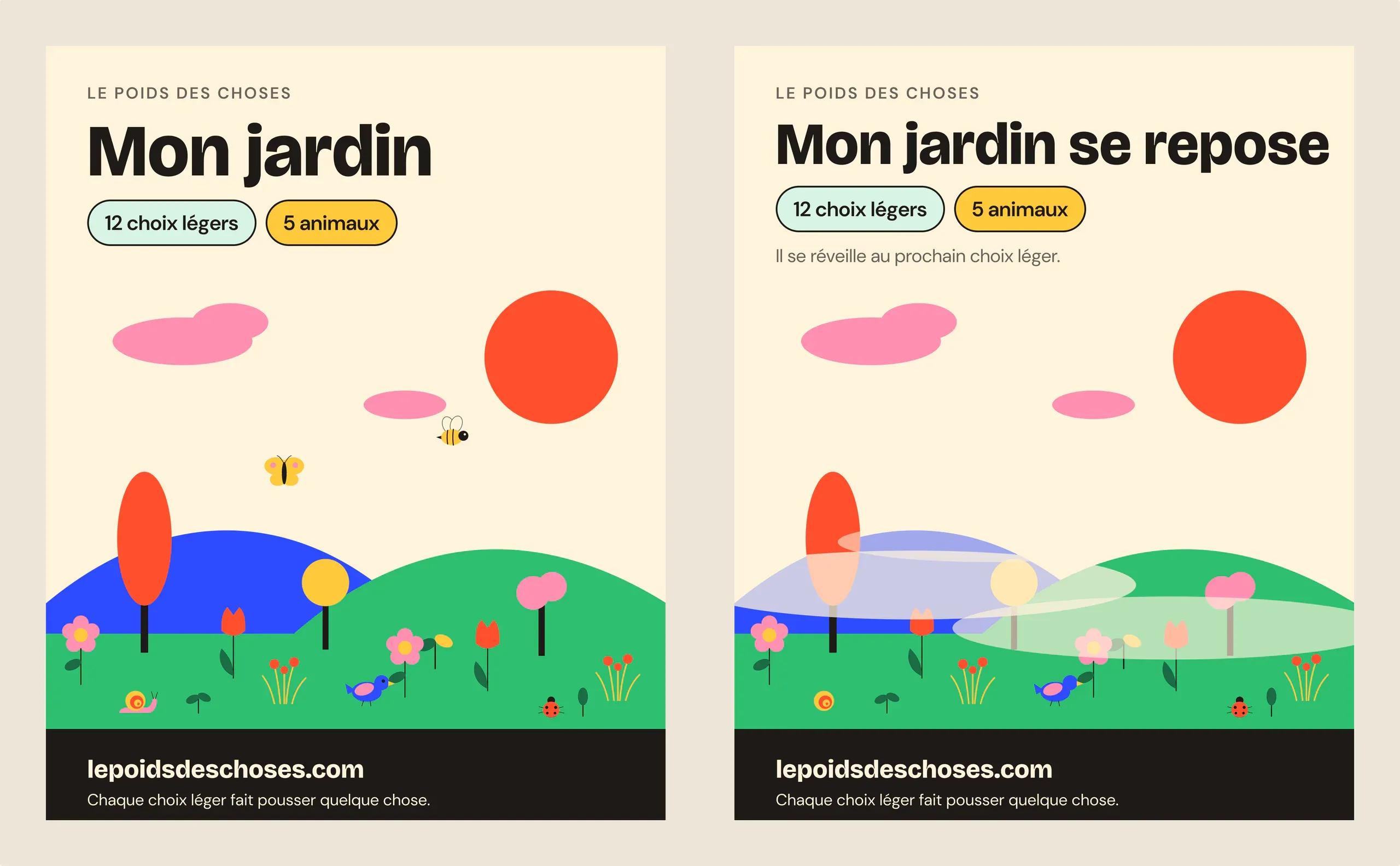
The share card, awake and asleep
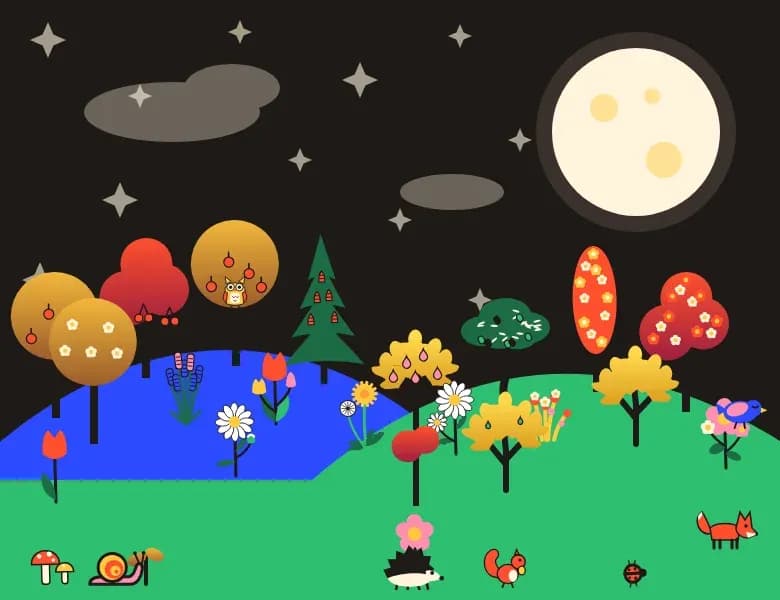
Night-time, with the owl 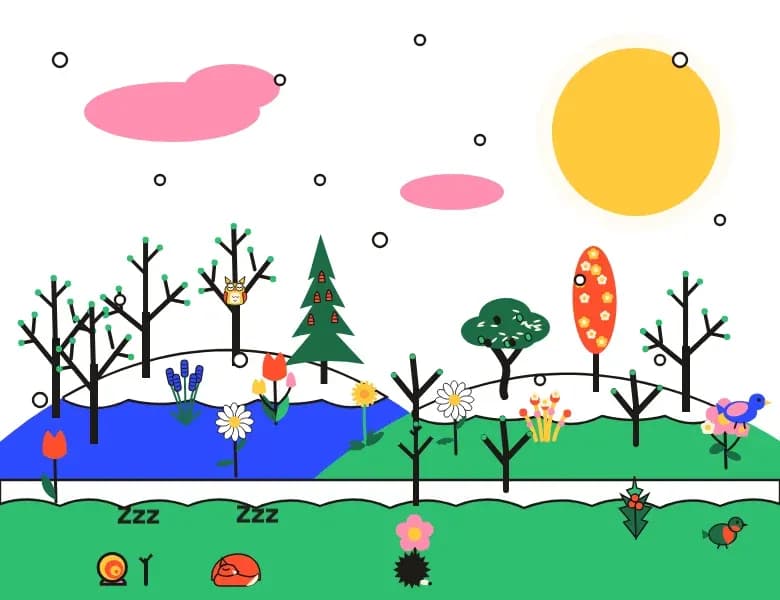
Winter: the trees are asleep 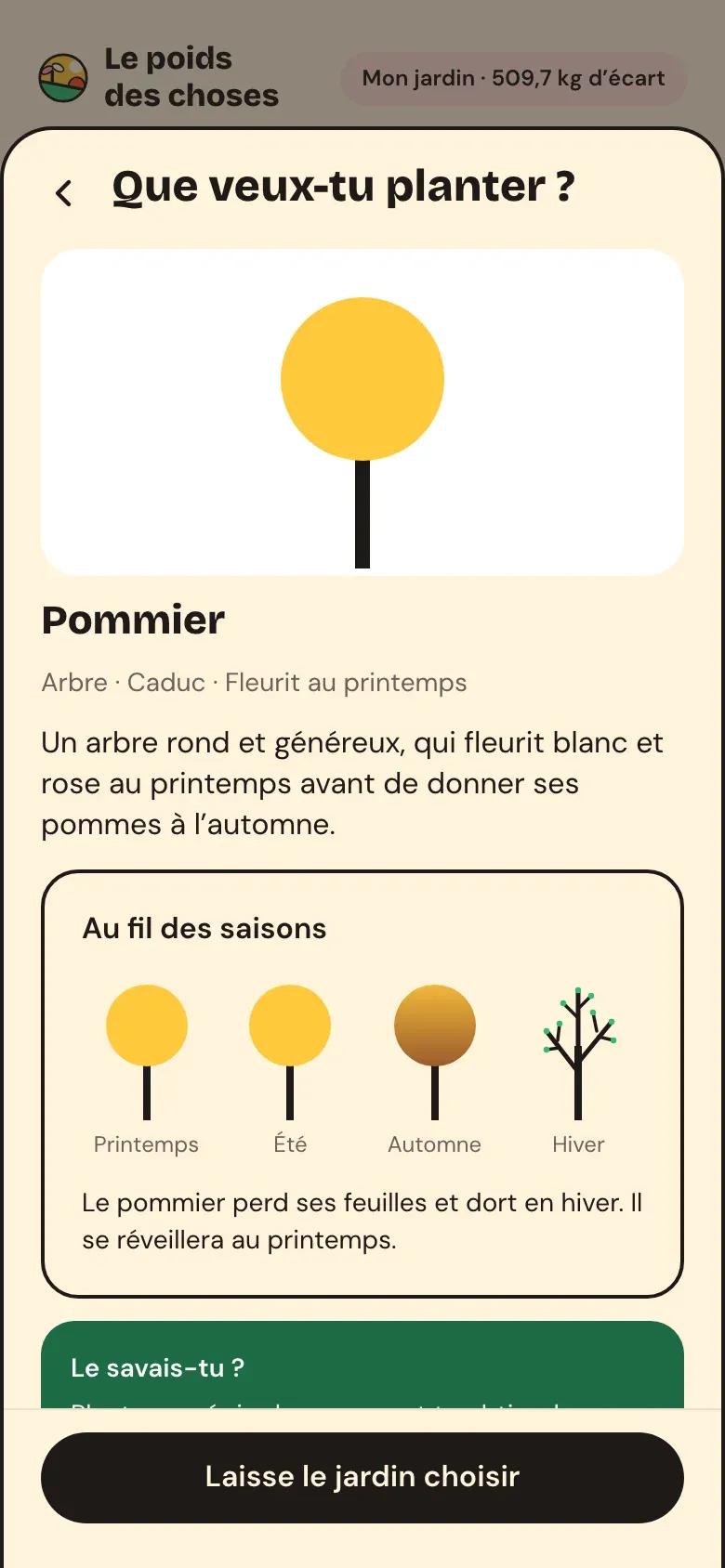
A species card, through the seasons 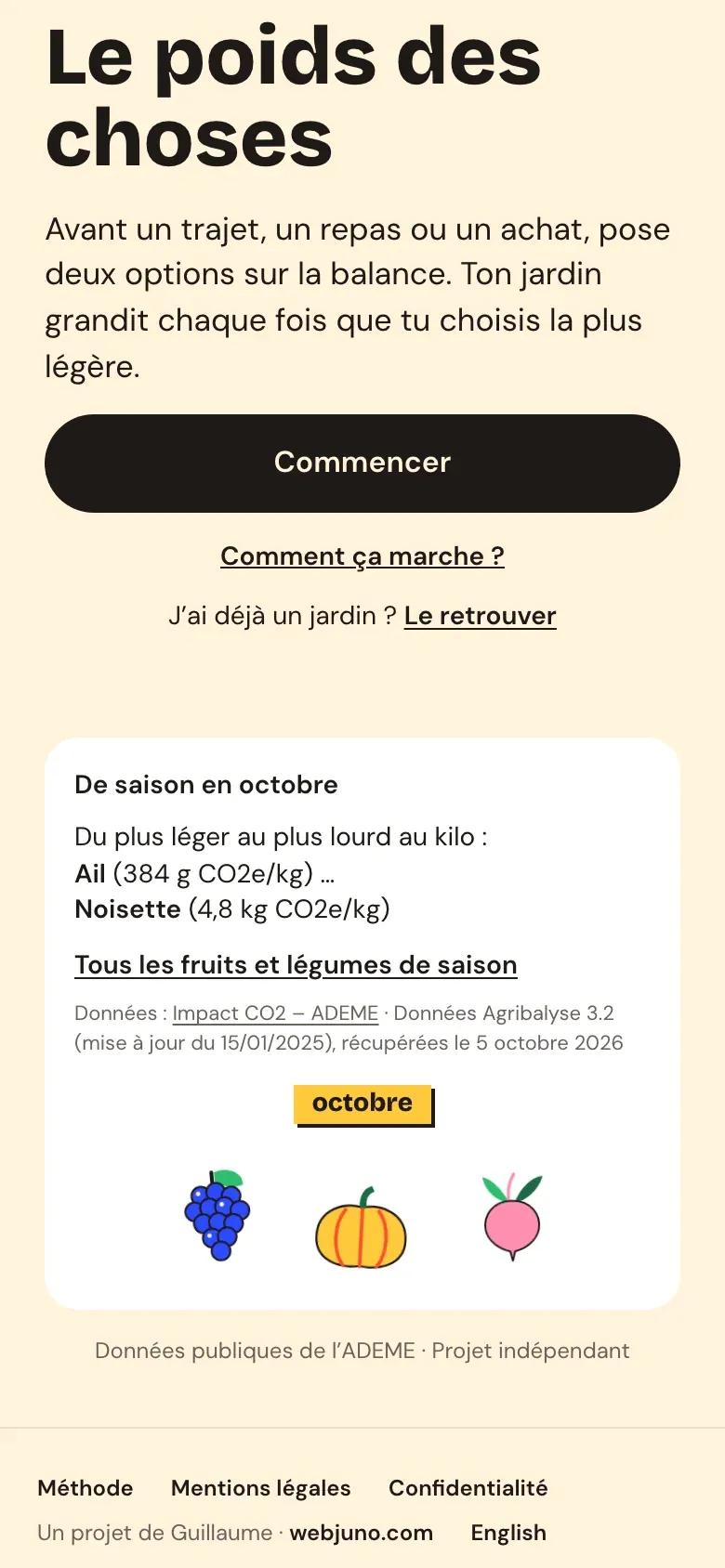
What's in season, on the home page
Visit the live site
lepoidsdeschoses.comA personal project by Webjuno. Illustrations made with the help of AI and retouched by hand, code largely written with Claude Code. Data: Impact CO2 – ADEME.