Case study · 2026
Billets doux
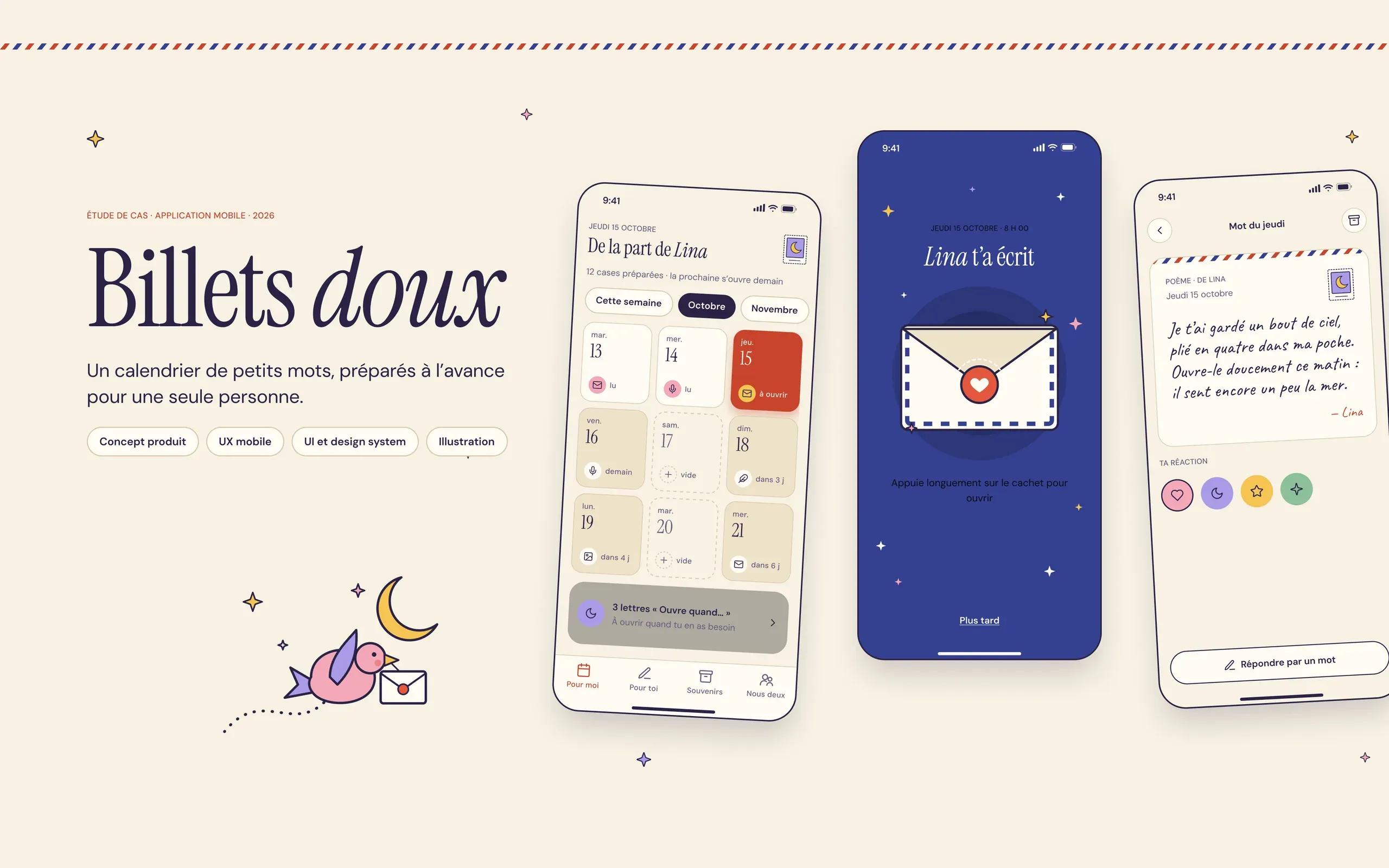
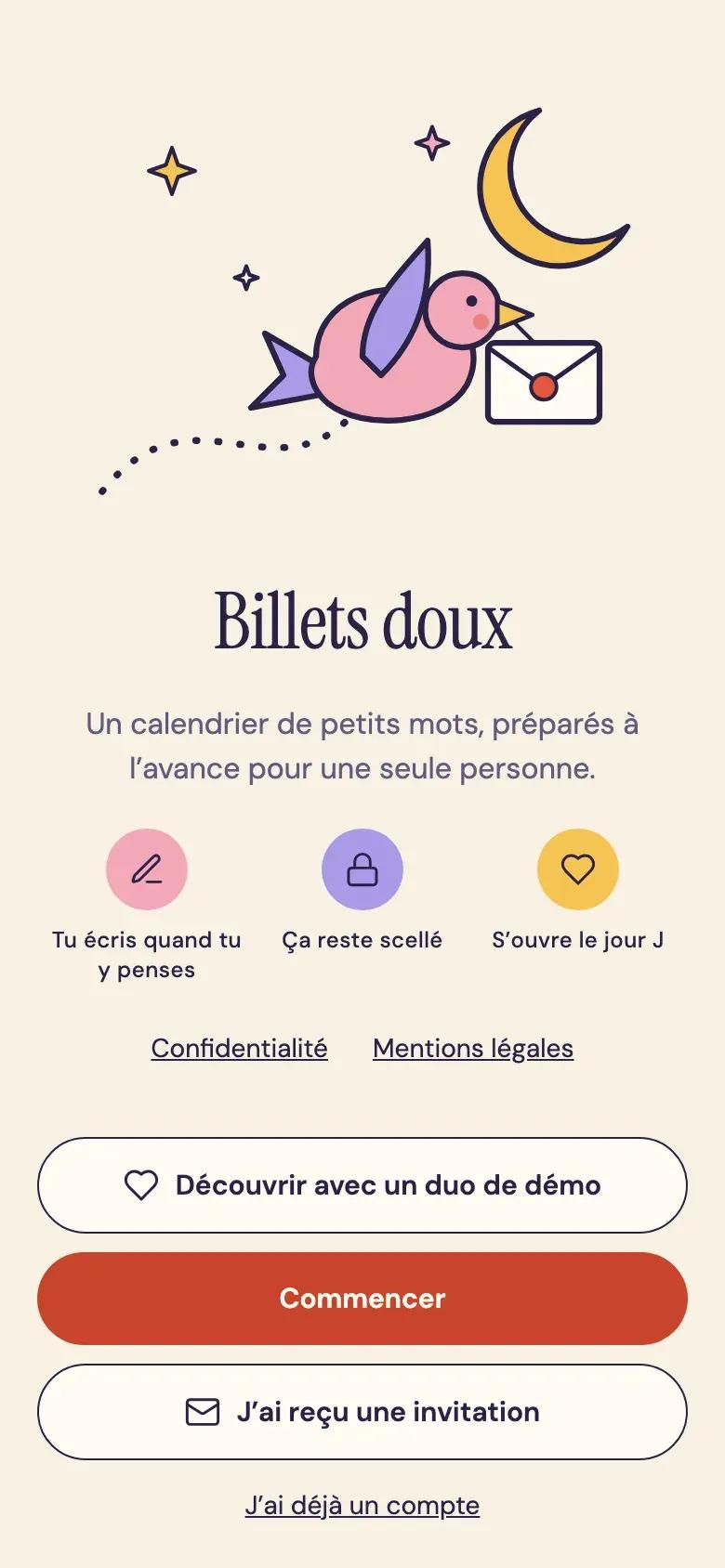
A mobile app for two: you prepare little notes in advance, they stay sealed and open on the chosen day. Concept, art direction, user flows, and code written with Claude Code.
- Role
- Concept, art direction, user flows and product decisions: me. Figma mockup and code produced with Claude and Claude Code under my direction; phone testing, deployment and operations: me.
- Stack
- Expo / React Native · TypeScript · Expo Router · Reanimated · Payload CMS · Next.js · MongoDB Atlas · Cloudflare R2 · Cloudflare Pages · Heroku · Expo Push / Firebase Cloud Messaging
- Status
- Web demo live, Android app in testing
01Context
An Advent calendar of words, for one person only.
A lovely thought often comes to mind at the wrong moment. Billets doux lets you write it down right away and let it open later, on the chosen day. A note, a poem, a photo or a voice message: each box of the calendar holds one, for one person only.
The app connects one duo, and only one. No feed, no streaks to keep, no statistics. Each person watches their calendar fill up without ever reading a note before its day: the waiting is part of the pleasure.
The app went from idea to launch in a few days. That pace rests on a method: the complete mockup in Figma before the first line of code, then steps tried out one by one on an Android phone, automated tests, and a check of the production setup after launch. Next step: a test for two, on two phones.
The need
Staying close day after day takes energy. You needed to be able to write when it comes to mind, and have the note arrive at the right moment, without pressure.
My role
The concept, the art direction, the user flows and every product decision. The mockup and the code are produced with Claude and Claude Code under my direction. I test on the phone, deploy and run it.
Constraints
One week. Mobile first. Intimate content: security and privacy at the core, with notes locked by the server and an API, a database and media hosted in Europe.
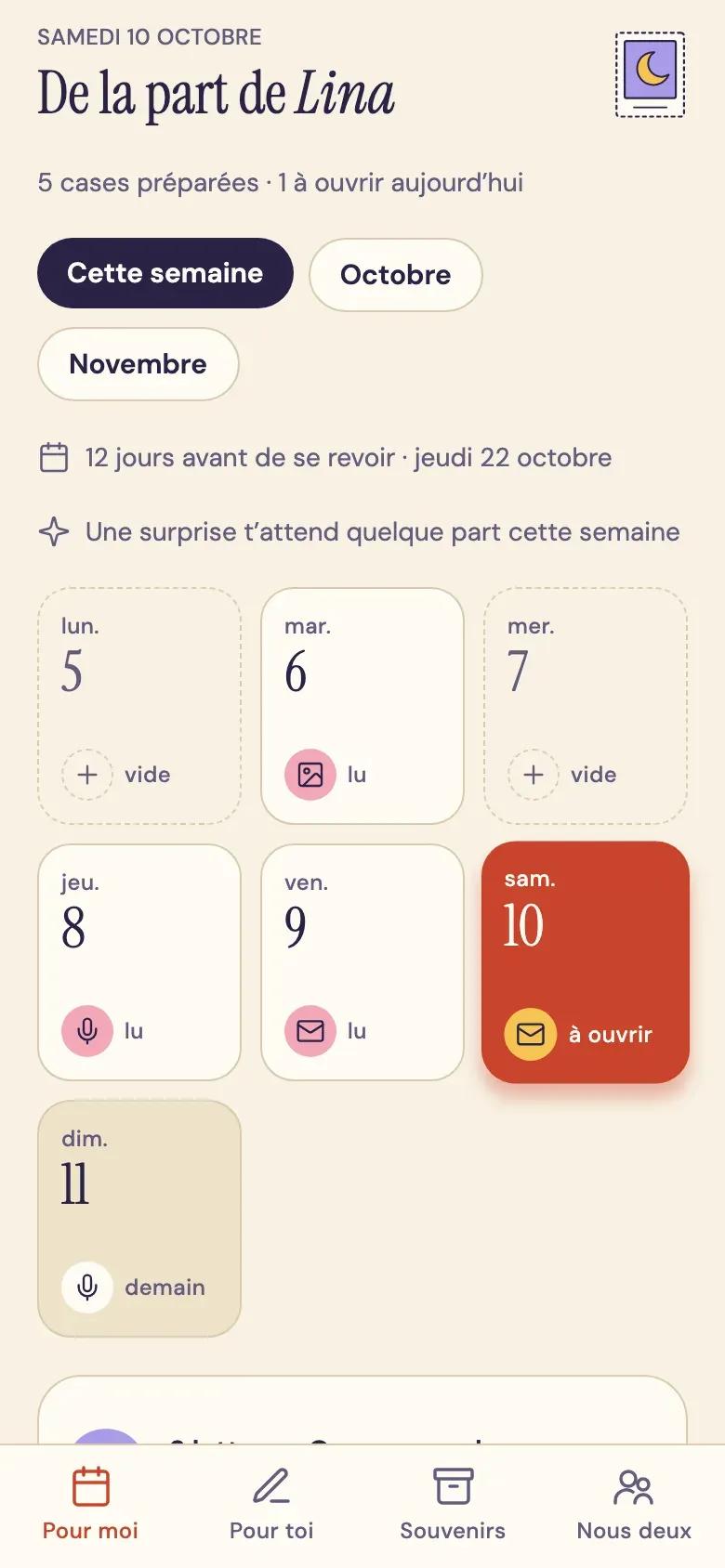
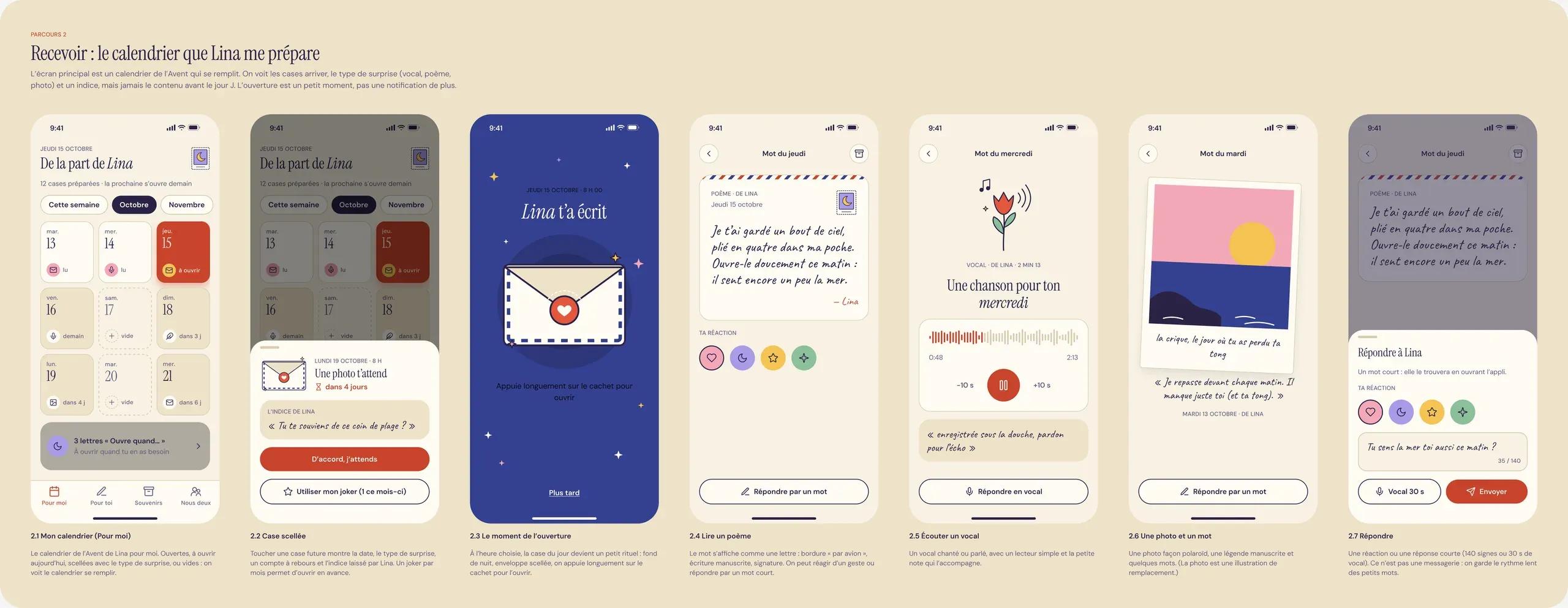
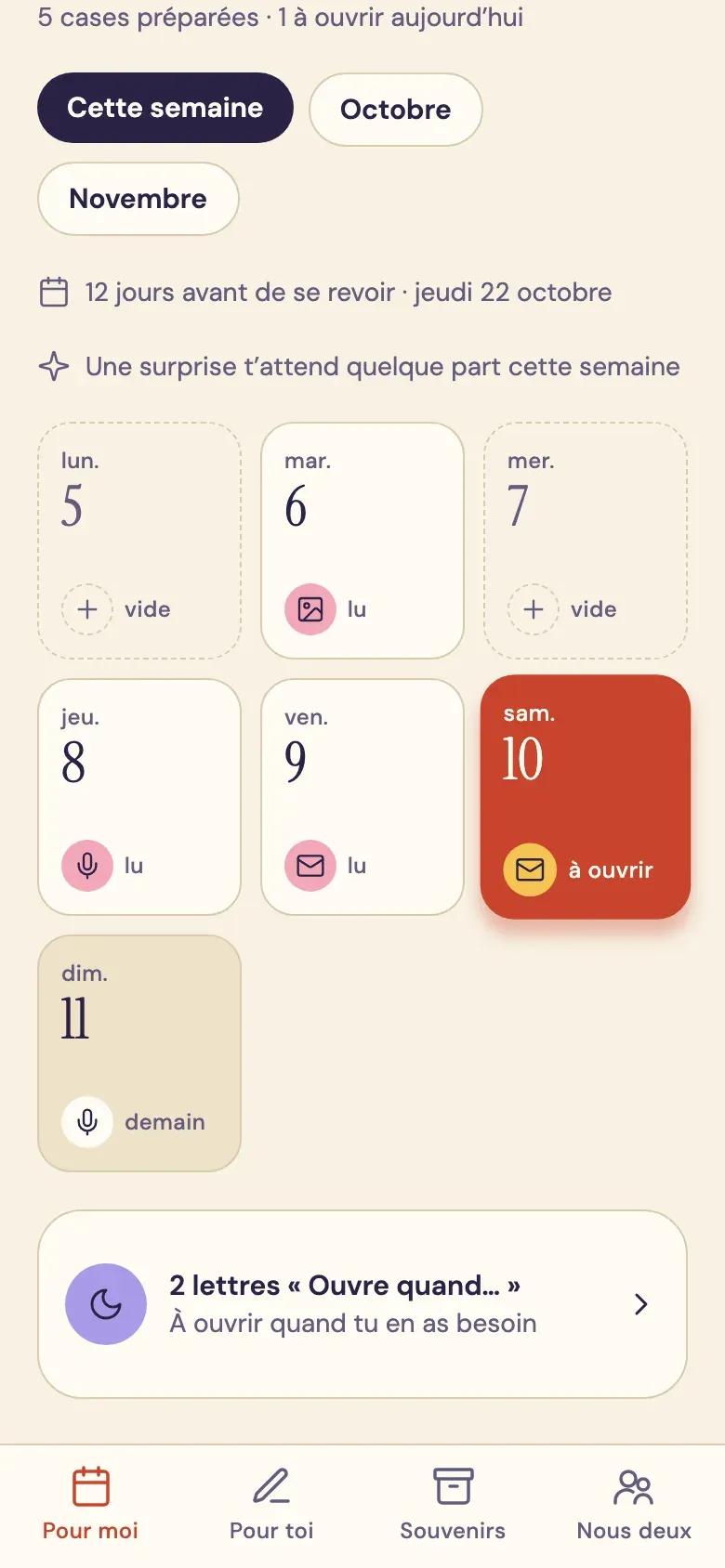
“For me”: the calendar the other person prepares for me. 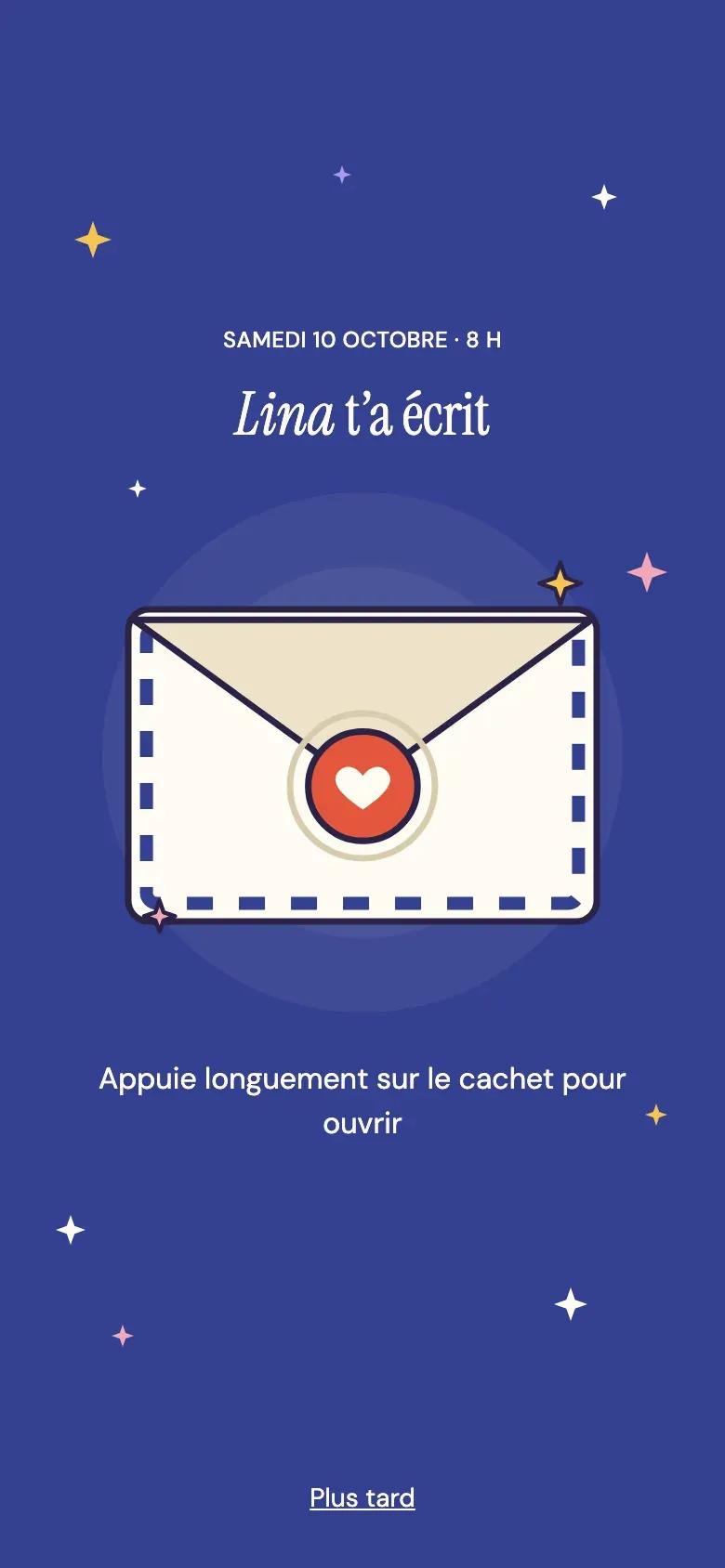
The opening ritual, on a night background. 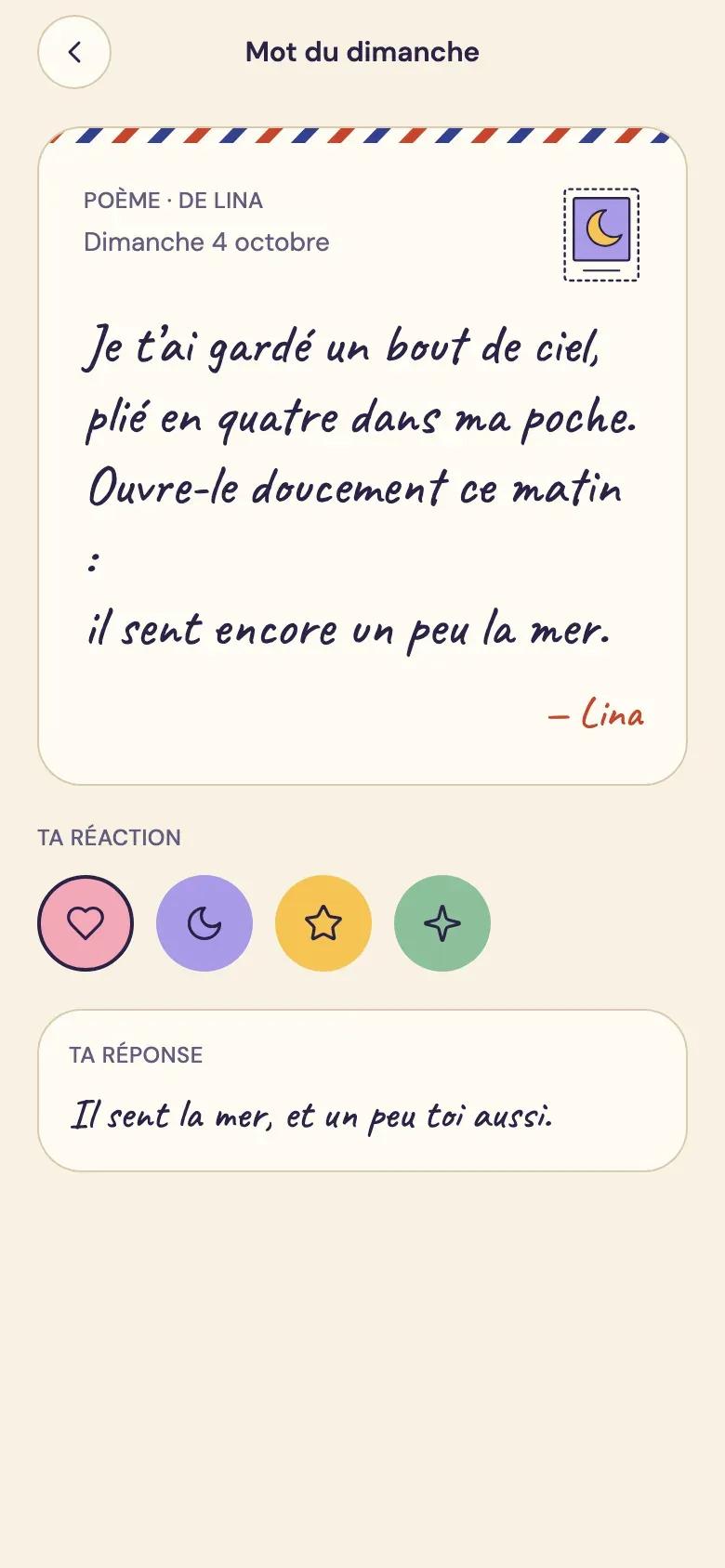
A handwritten letter, once opened.
02Art direction
Dreamlike mail: paper, ink and a night sky.
I wanted opening the app to feel like opening your mail. The backgrounds are cream papers, the text a very dark violet ink. Seal red is kept for actions and today's box. The bright colours stay on decorations, dots and illustrations, and never carry text. The one exception is the night blue of the opening ritual, where cream text reaches 8.9:1.
Instrument Serif carries the headings, with the elegance of a letter. DM Sans carries the interface. Caveat makes the notes look handwritten. It can be swapped for DM Sans, note by note.
Colours
- Seal#C8442C
Actions and today's box
White text 4.86:1
- Coral#E4573D
Decoration and illustrations
Black text 5.72:1
- Pink#F4A7B9
Decoration and dots
Black text 11.07:1
- Sun#F6C453
Decoration and dots
Black text 12.93:1
- Lavender#A99BE8
Decoration and dots
Black text 8.54:1
- Night#34408F
Opening ritual background
White text 9.22:1
- Sage#8CC09A
Decoration and dots
Black text 10.12:1
- Paper#F8F1E3 — Screen background
- Shaded paper#EEE2C9 — Sealed boxes and panels
- Card#FFFBF3 — Cards, letters and tab bar
- Ink#2A2346 — Text
- Soft ink#645C7E — Secondary text
Typefaces
Instrument Serif
Headings
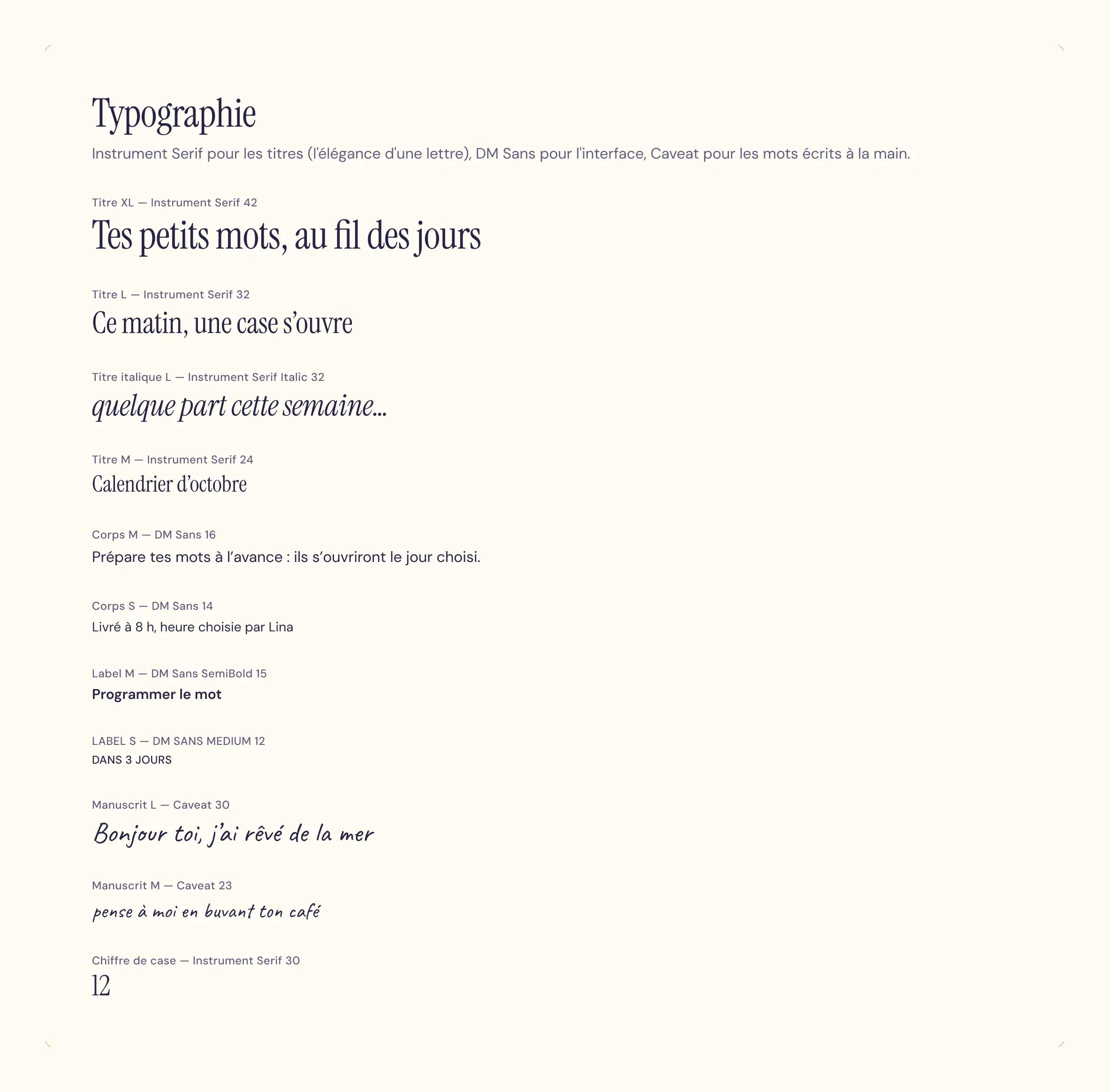
DM Sans
Interface and body text
Caveat
Handwritten notes
03User flows
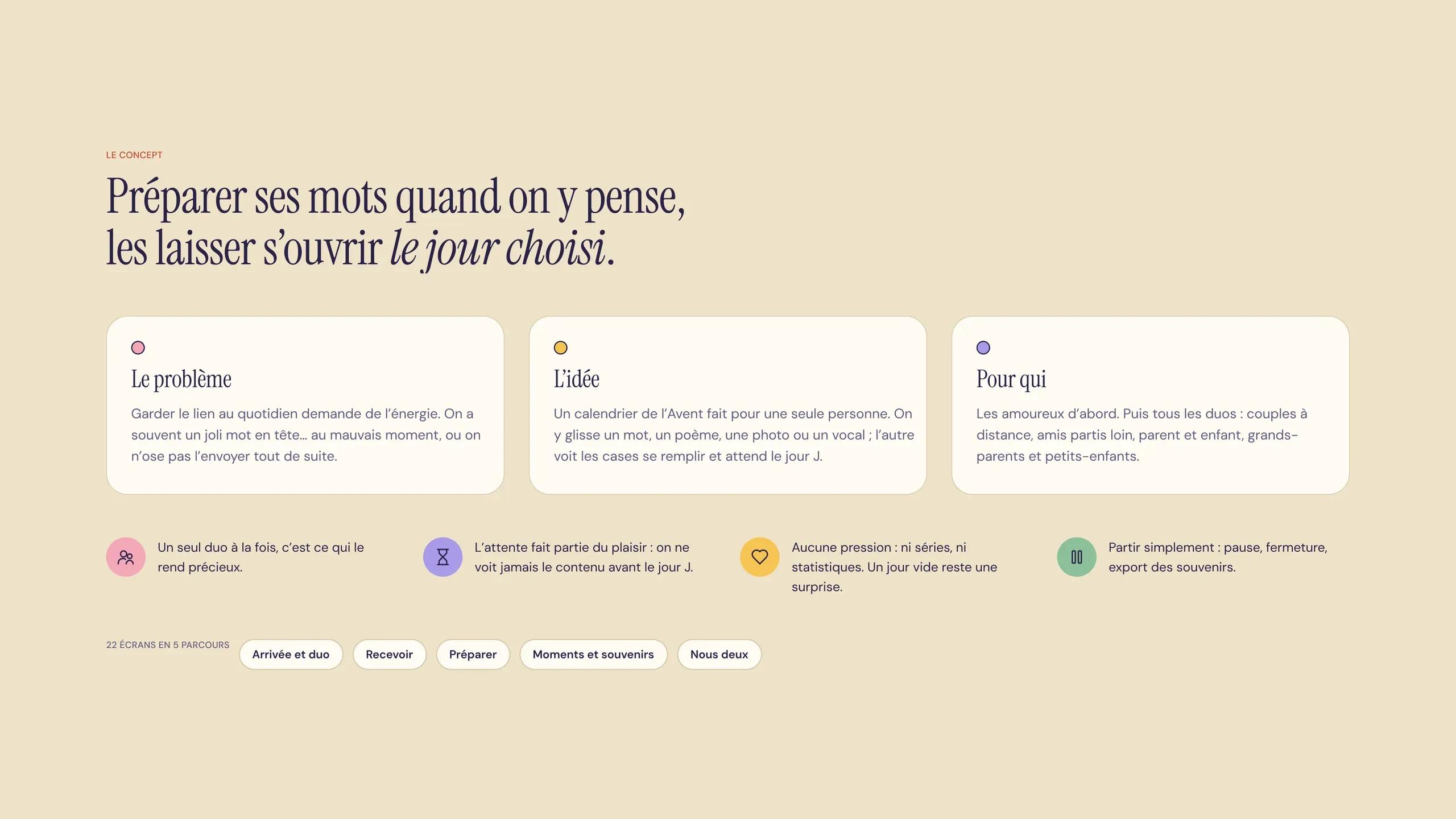
22 screens in 5 flows, designed before the code.
Before writing a line of code, I had the whole app mocked up in Figma: the foundations (colours, typography, icons, components), then 22 screens across five flows. Arriving and creating your duo, receiving, preparing, keeping memories, adjusting the duo or closing it.
The mockup was the reference at every step. The code takes over its colours and text styles as variables. A few screens have changed since, after testing on the phone. Two mocked-up screens, the book of our notes and the gift calendar, are waiting for a future version.
04The ritual
Opening a note is a small moment, not one more notification.
When the day comes, the box turns red. A tap opens the ritual: an envelope on a night sky, opened with a long press on the seal. The features follow the same idea: preparing without effort, keeping the secret, and letting the other person discover.
The press lasts 1.2 s, then the seal swells, turns and disappears in 0.9 s, and the envelope fades away. If the phone asks for reduced motion, a simple soft fade replaces the movement. With TalkBack, a double tap is enough.
At rest
Today's box is waiting, “to open”.
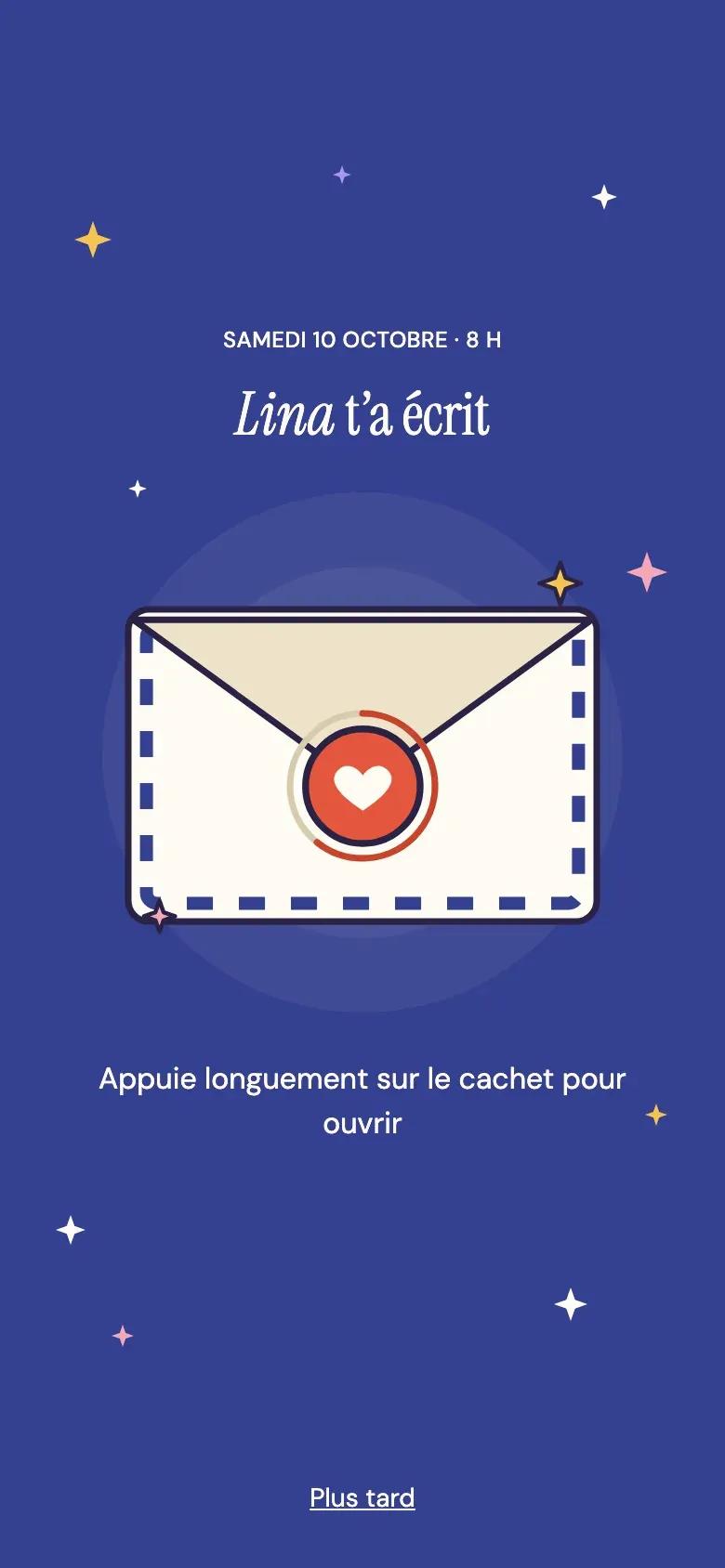
Long press
A ring draws itself around the seal.
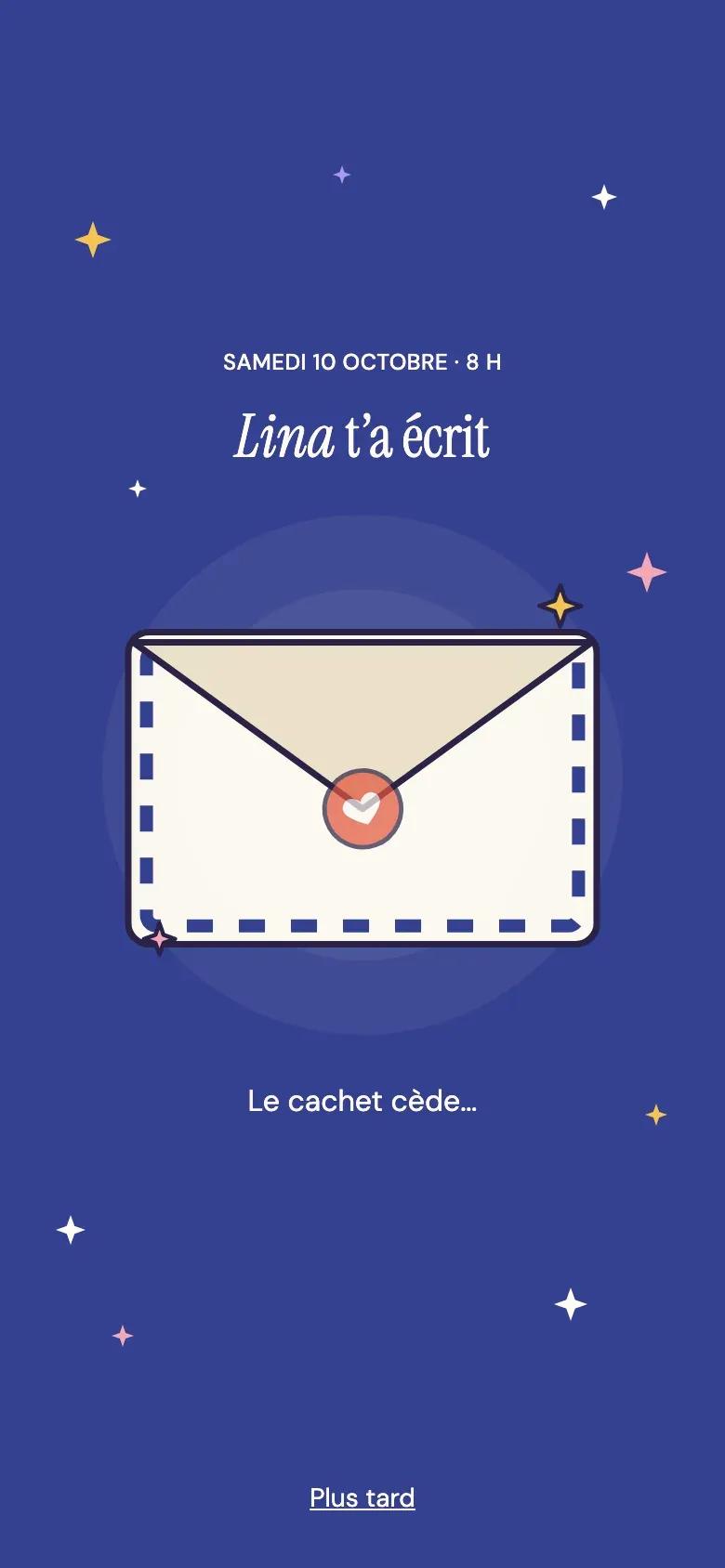
Opening
The seal gives way, the envelope fades.
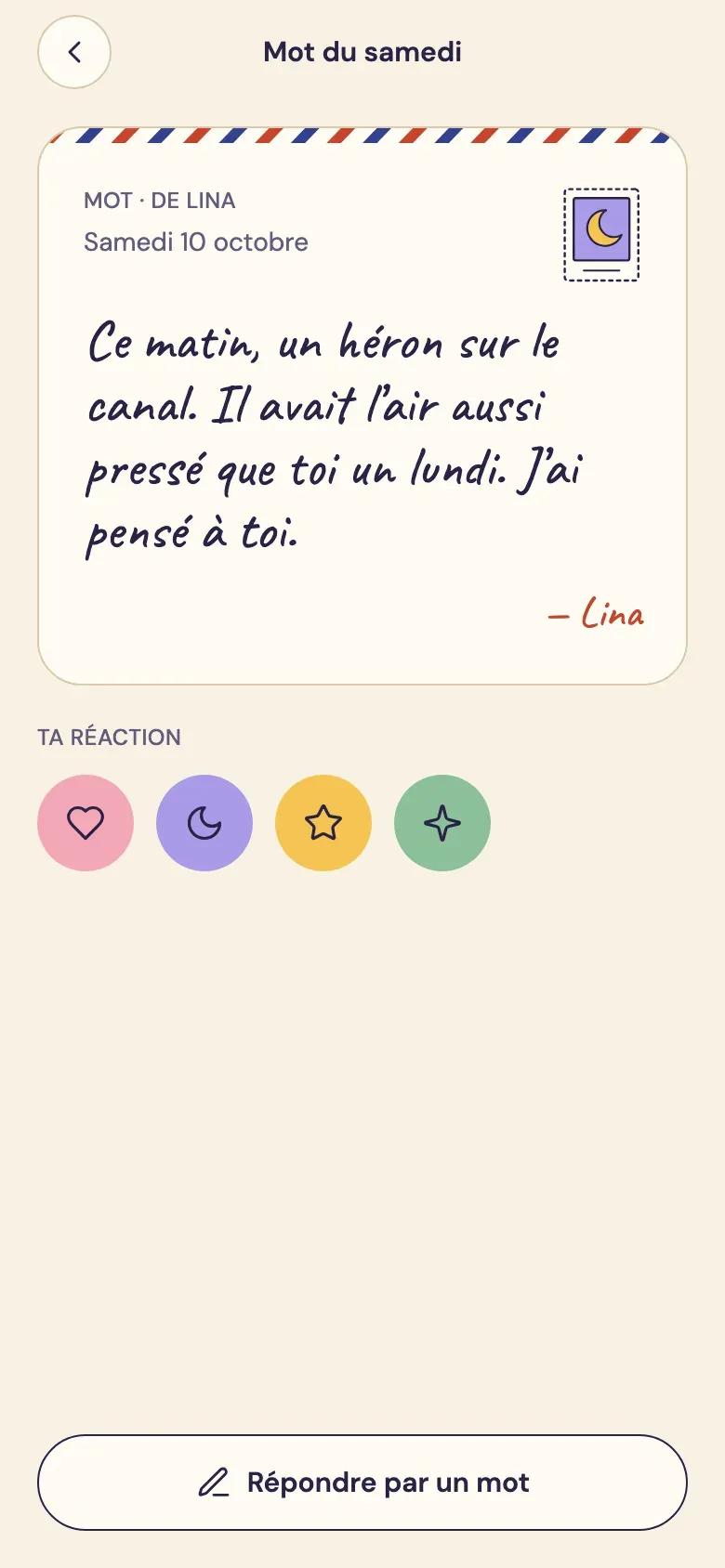
Reading
The note appears, like a letter.
Prepare it when it comes to mind.
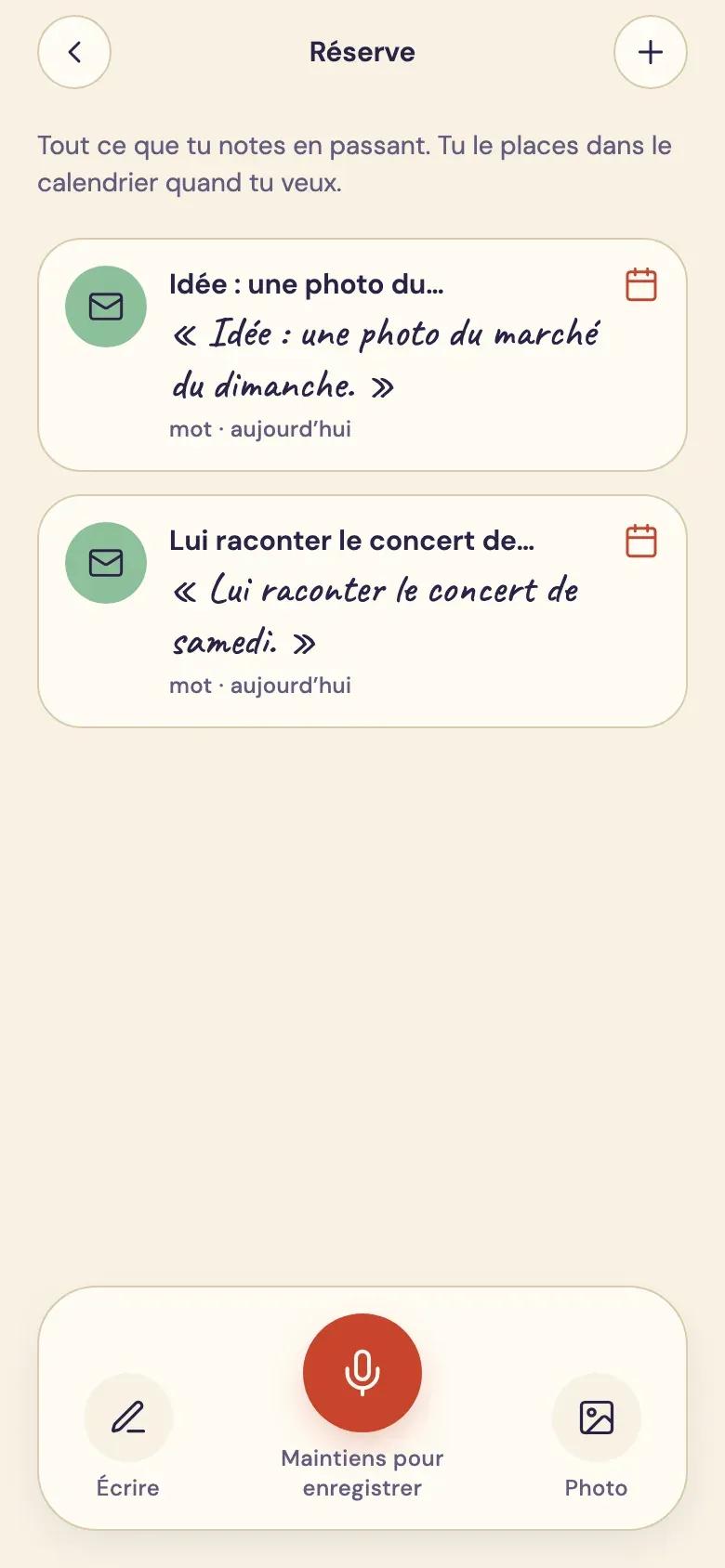
An idea comes up on the metro? You note it in the reserve, without picking a date. Holding records a voice message, a tap adds a photo. The draft saves itself while you write.
Later, you place the note in the other person's calendar: on a specific day, or “sometime this week” to keep the surprise.
A secret kept by the server.
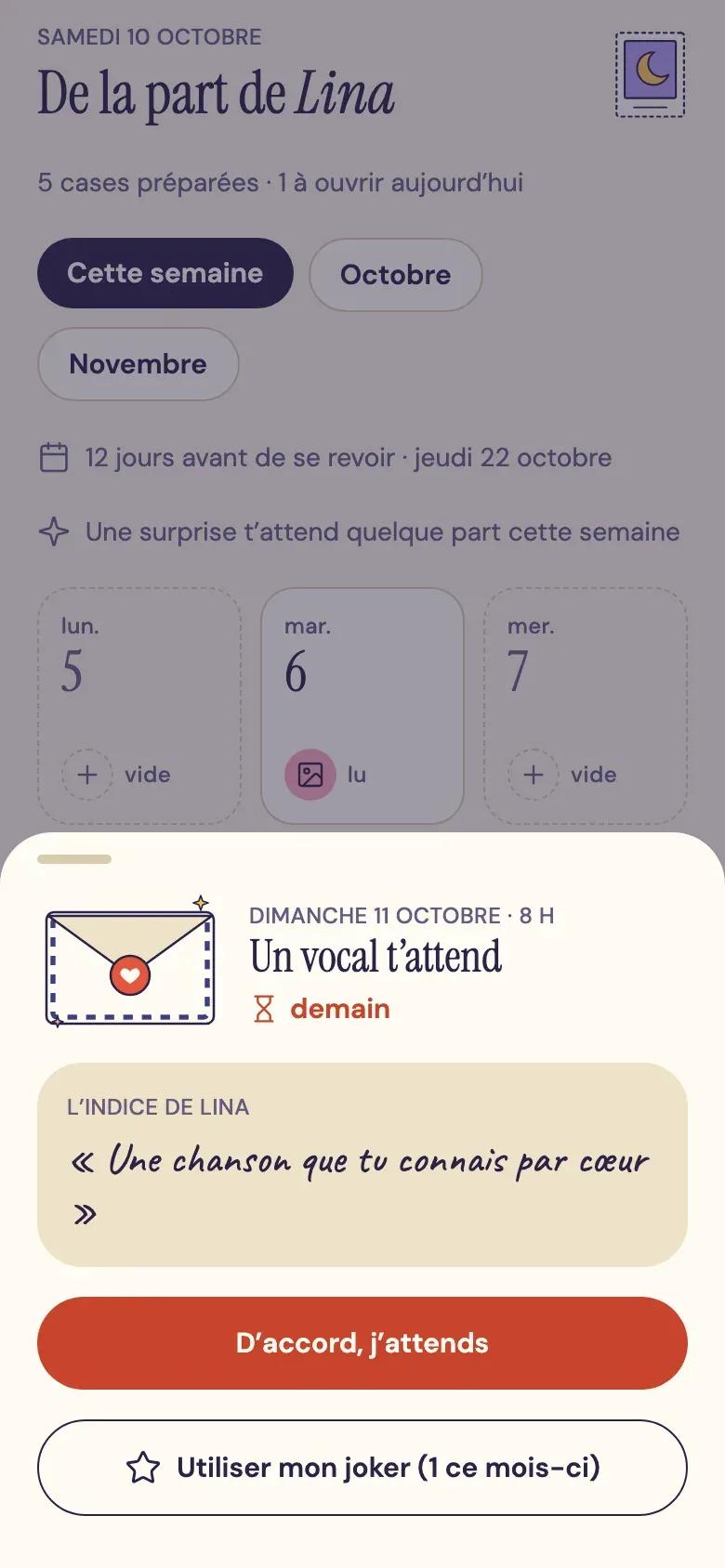
Before its day, a sealed box shows only its date, its type and, if the author wants, a hint. The content does not leave the server before the time.
One joker a month lets you open a note early, and the author can see it.
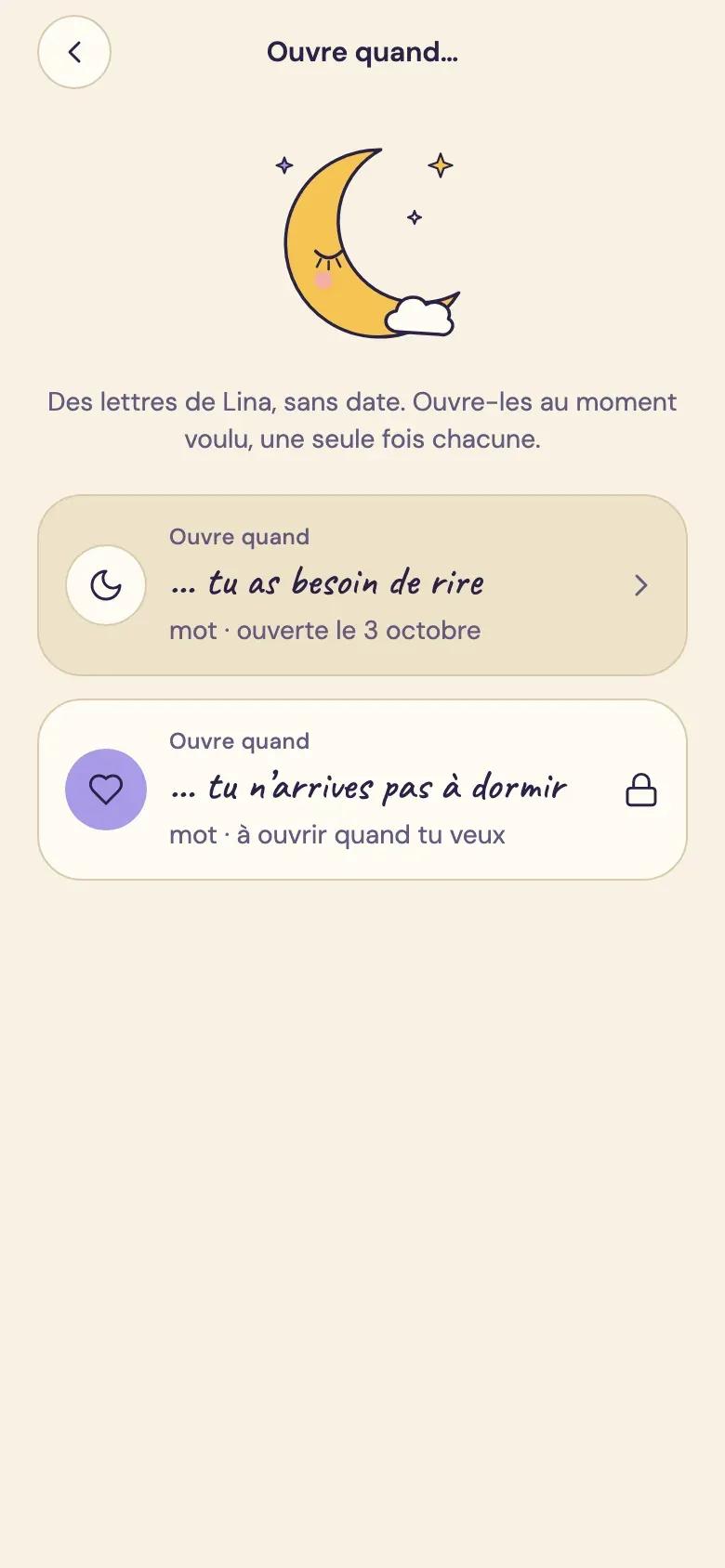
“Open when…” letters.
Some notes have no date: “Open when you can't sleep”, “… when you need a laugh”. The other person keeps them at hand and opens them when they need to, once each.
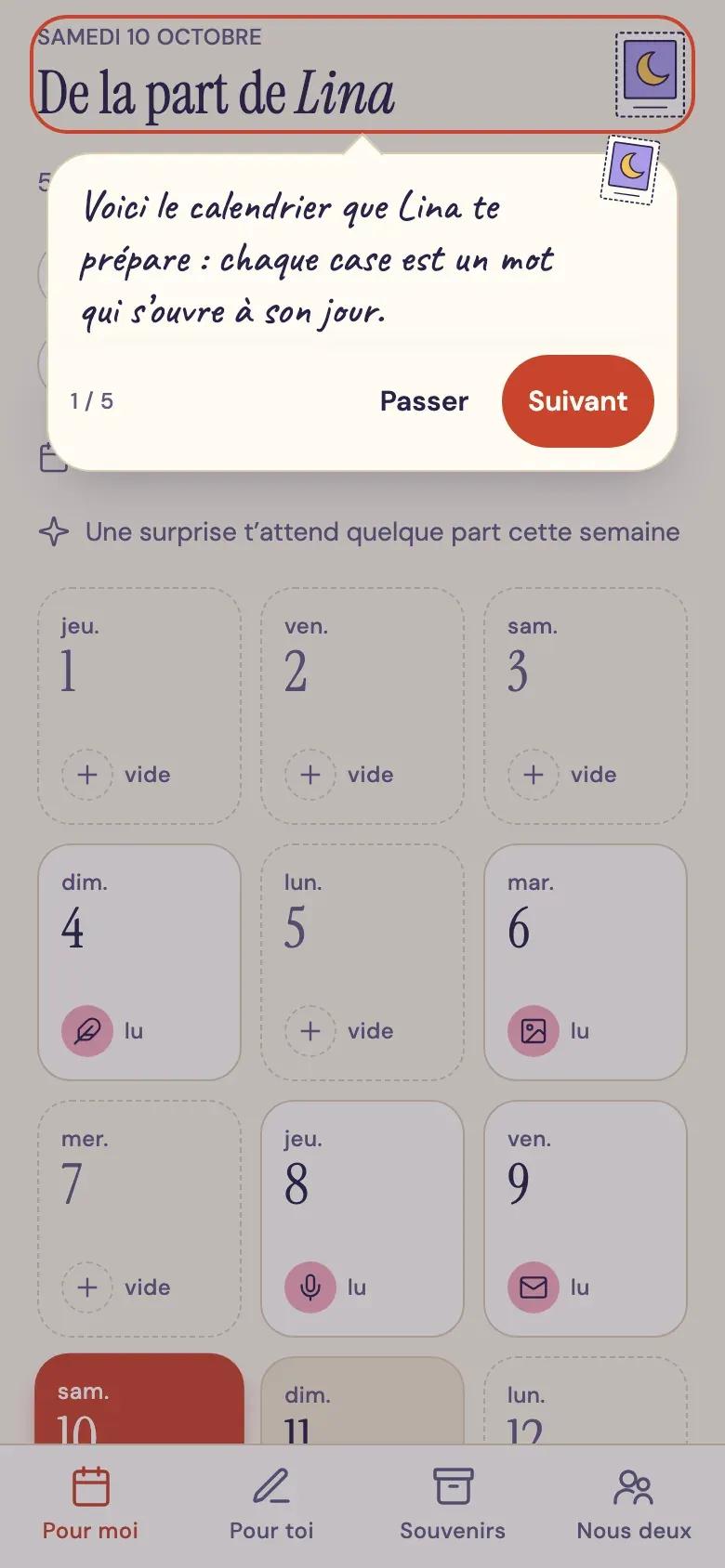
A demo you can explore on your own.
A button logs you into Léo and Lina's demo duo, already filled on both sides. The tour starts with the ritual, then five bubbles present the calendar, a sealed box and the tabs.
Everything is allowed except the irreversible: you can neither close the duo nor delete the account. The duo resets every night.
05Platforms
One codebase, three platforms.
The app is written once, in TypeScript with Expo, for iOS, Android and the web. Today, Android and the web are built; the Android app is still in testing, and iOS will come later.
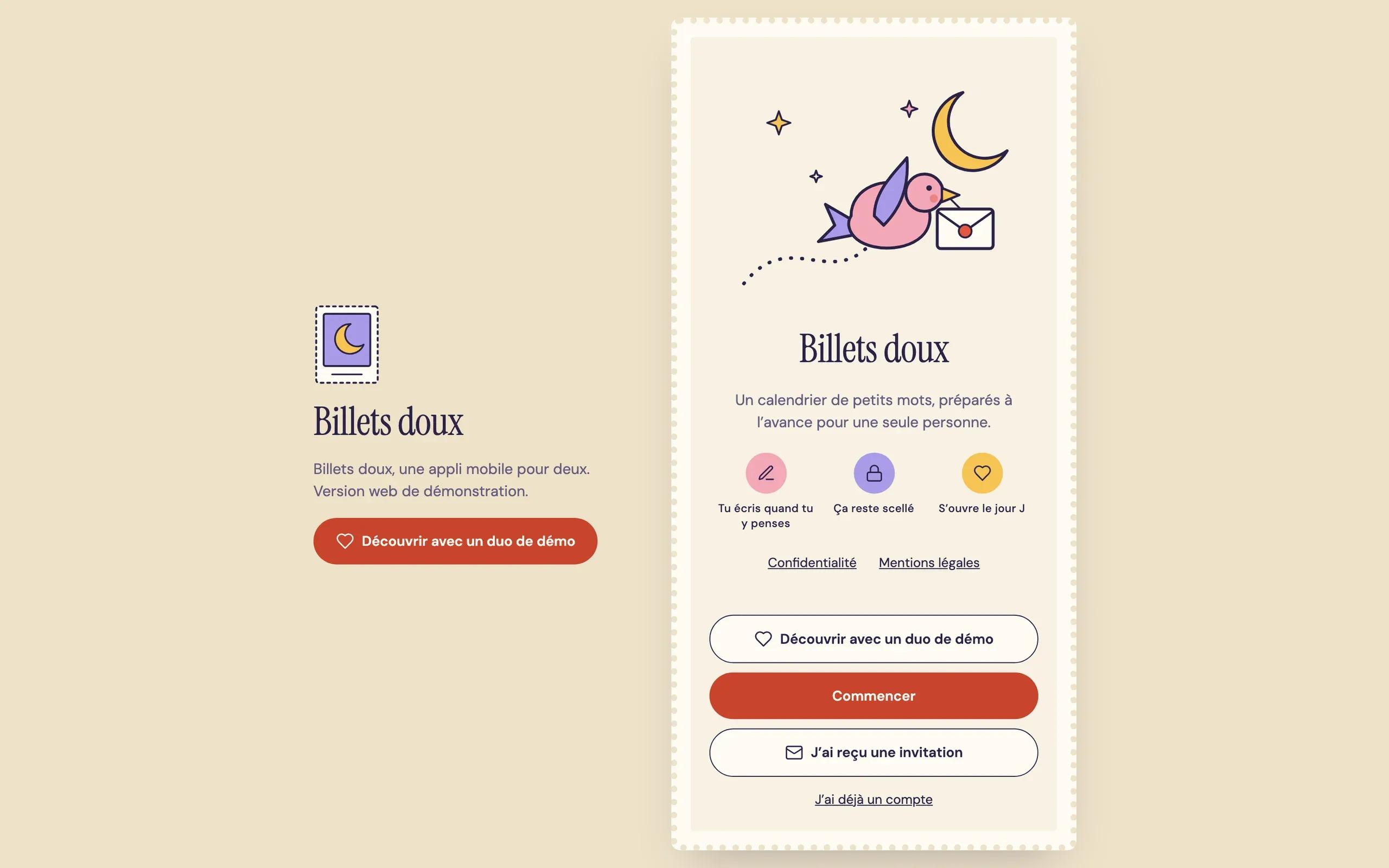
On a large screen, the web version shows the app inside a phone frame, with a button that opens the demo duo. I designed it for recruiters and curious visitors: see the app without installing it or creating two accounts.
06Under the hood
Intimate notes, discreet technology.
A Payload CMS API on Next.js, hosted on Heroku in Europe, a MongoDB Atlas database in Paris, media in a private Cloudflare R2 storage under EU jurisdiction, and the web version on Cloudflare Pages.
Under the hood
Server-side locking
The server only delivers a note at its time. Photos and voice messages go through signed links valid for 5 minutes, in private storage.
Notifications on the minute
A scheduled task runs every minute and sends the notification through Expo Push: a note due at 8 am rings at 8 am. Never any content in the notification.
Nightly backup
Every night, the database is backed up to a private folder of the storage, under EU jurisdiction. The last 14 backups are kept.
Accessibility
Labels for TalkBack, larger text respected (beyond ×1.3, the grid switches to two columns), contrasts calculated from the colours, reduced motion on request.
Leaving simply
Anyone can export their memories (an archive with the texts, photos and voice messages), pause the duo, close it, or delete their account.
In figures
169
automated tests
API, app and shared rules, all passing. pnpm test, 10 October 2026
4.71:1
minimum text contrast
Cream on seal red, and seal red on card. Calculated (WCAG 2) from the app's colours, October 2026
22
screens mocked up
Across 5 flows, counted on the Screens page of the Figma file, October 2026
19/19
production checks passing
API, web version, security headers, CORS, redirects. pnpm verifier:prod, read-only, 10 October 2026
Components and illustrations
The mockup's foundations, carried over as they are into the code: the components, the icons and the illustrations under the same names.
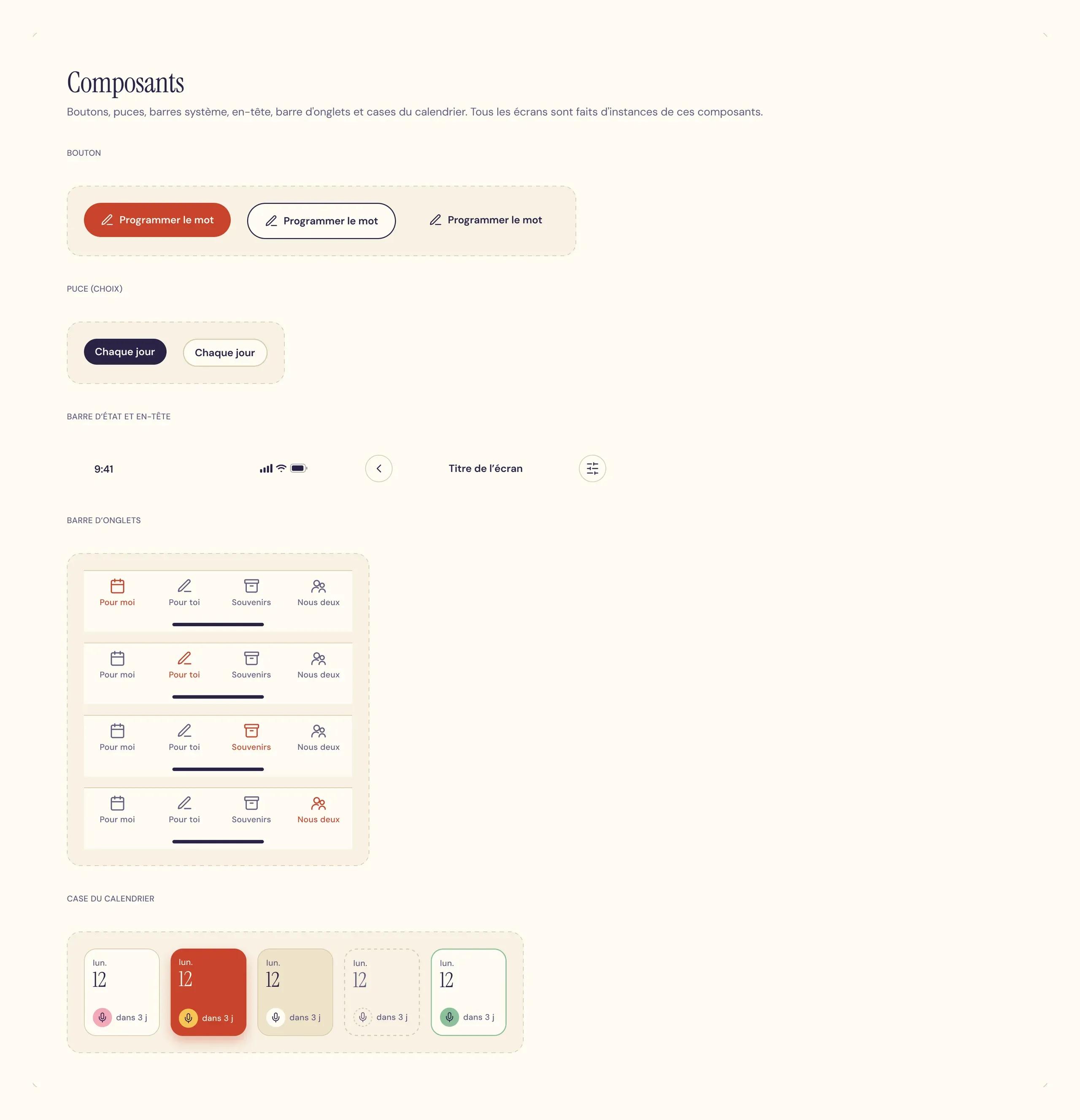
The components: every screen is built from their instances. 
The icons, based on Lucide (ISC licence), 1.75 px stroke. 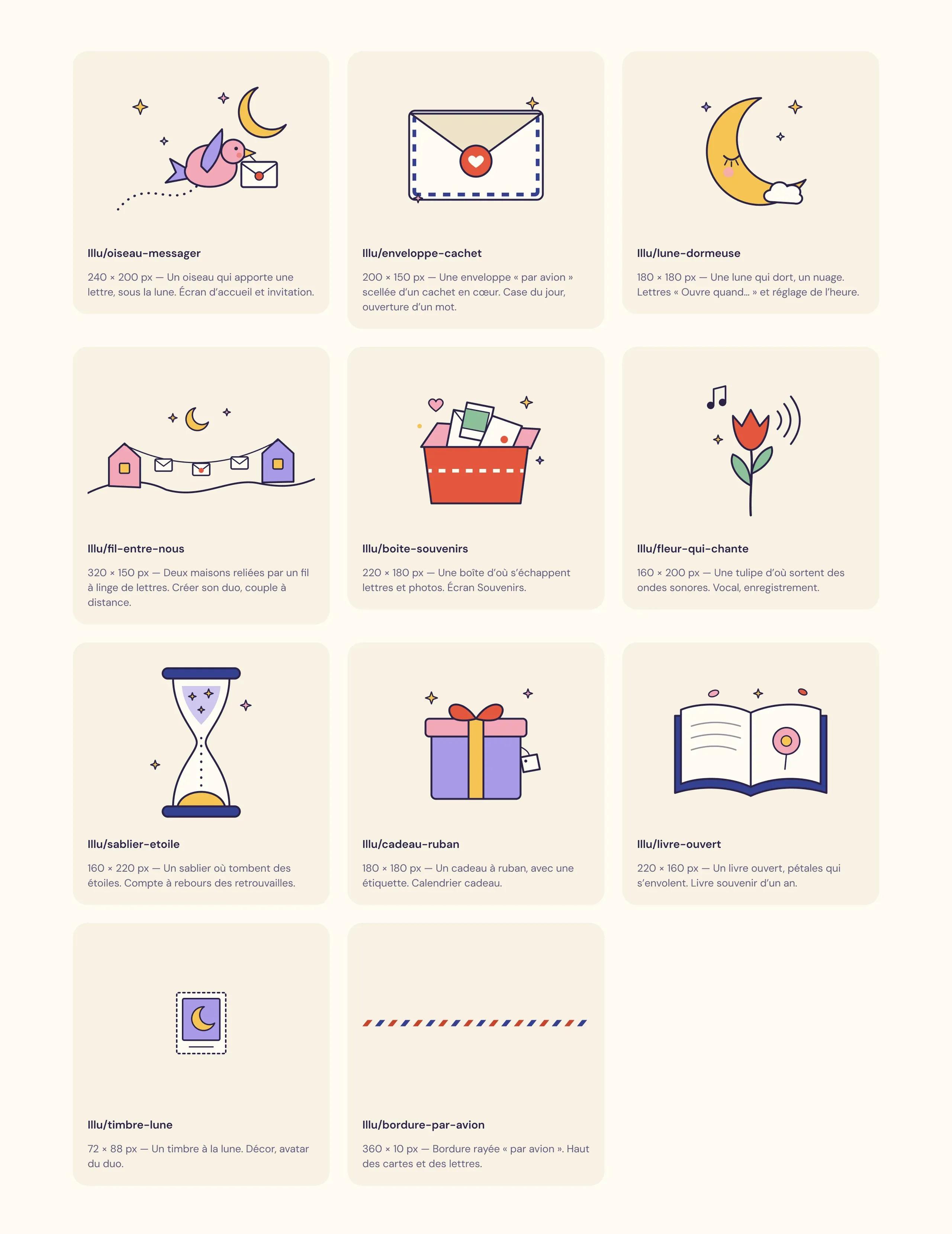
Illustrations drawn by hand, then refined in Illustrator.
Visit the live site
billetsdoux.appPersonal app designed by Webjuno and built with Claude Code. The content shown is from the fictional demo duo.